
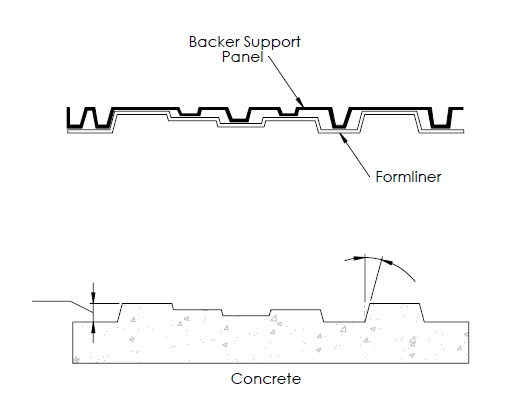
The first patented backer panel system for plastic concrete form liners. Instead of hand-fitting strips behind the liner, this pre-engineered support nests right behind it and carries the load of the pour. As a result, the liner and its backing go into the form together — with no loading of individual voids, and fewer seams.
Plastic form liners are an affordable way to bring texture and relief to concrete. Because they are thin, however, the pressure of a pour can push the liner into the recesses of its own pattern. Left unsupported, that deflection distorts the finished surface. For years, the only fix was to hand-fit wood strips and blocking behind the liner before every pour.
Spec Formliners changed that. Our patented backer panel is pre-engineered to match the pattern, so it nests behind the plastic liner and supports it exactly where the concrete pushes hardest. As a result, the backer and liner go into the form as a single assembly — ready for concrete without any additional support structures.
The payoff is easy to see. Installation moves faster, field labor and material drop, seams are reduced, and the finished surface reads as more uniform. In many cases, the system even costs less than thicker liners that would need backing anyway.
Backing a plastic form liner used to mean slow, manual work on the jobsite. Now, however, a single engineered component replaces all of it.
The backer panel provides a pre-engineered support structure that works with standard forming equipment — from tilt-up beds to precast and cast-in-place forms.
Every benefit ties back to one idea: move the support work off the jobsite and into an engineered component.
The system works with standard forming equipment and adapts across project types and scales. In short, it is a rigid, ready-to-use solution wherever plastic liners are used.
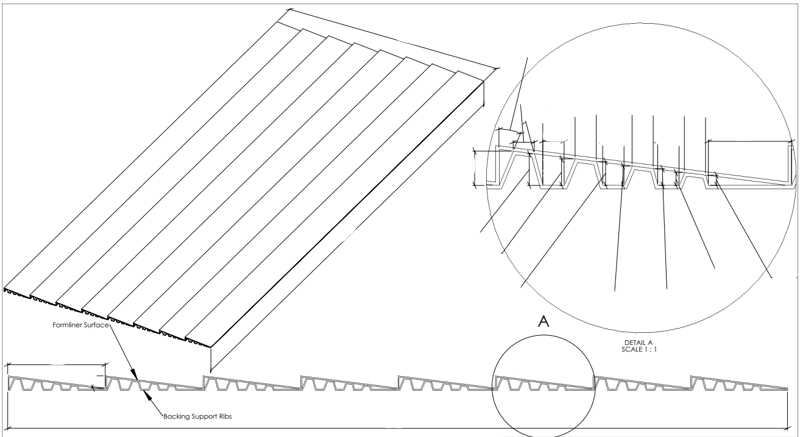
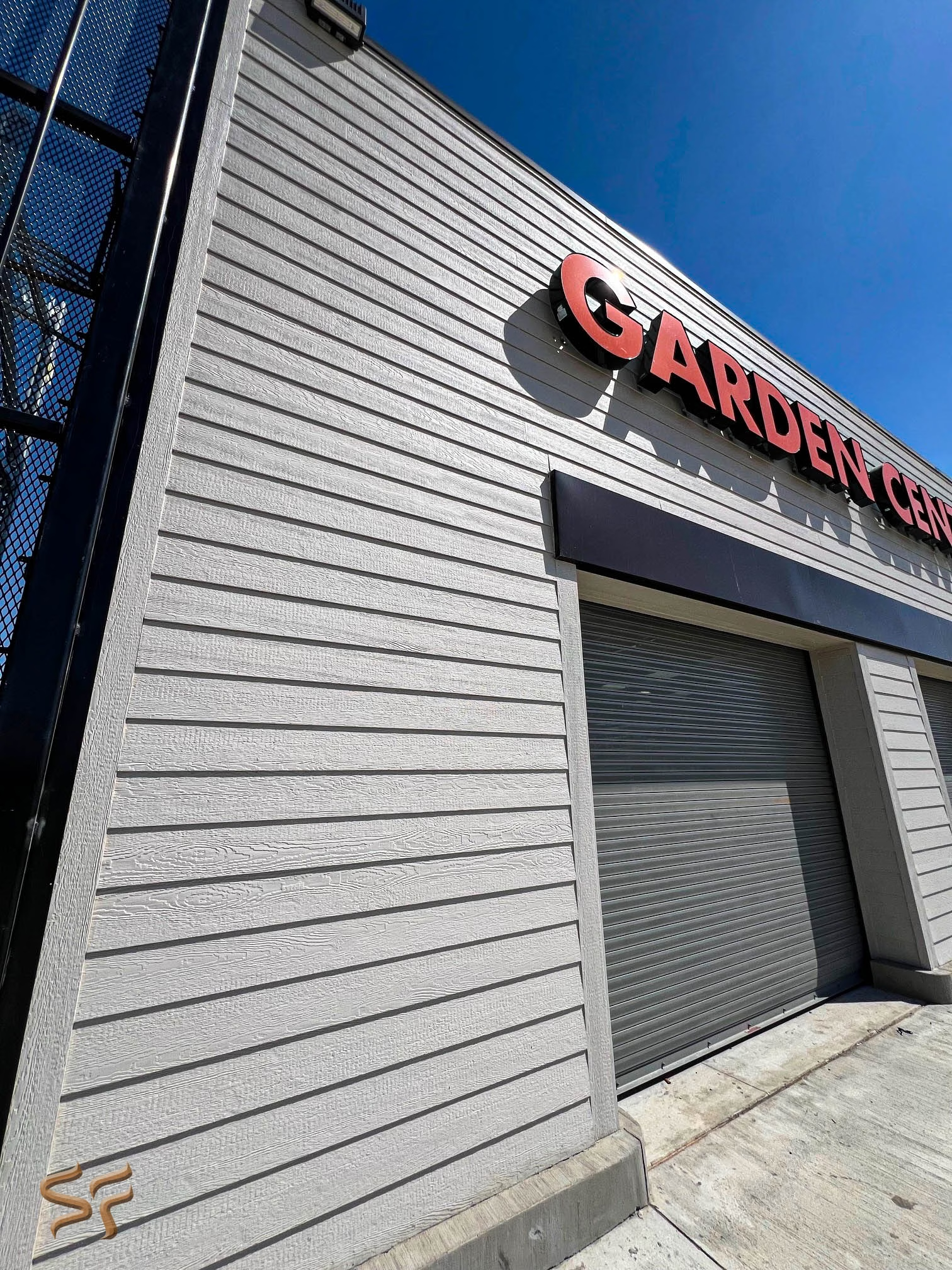
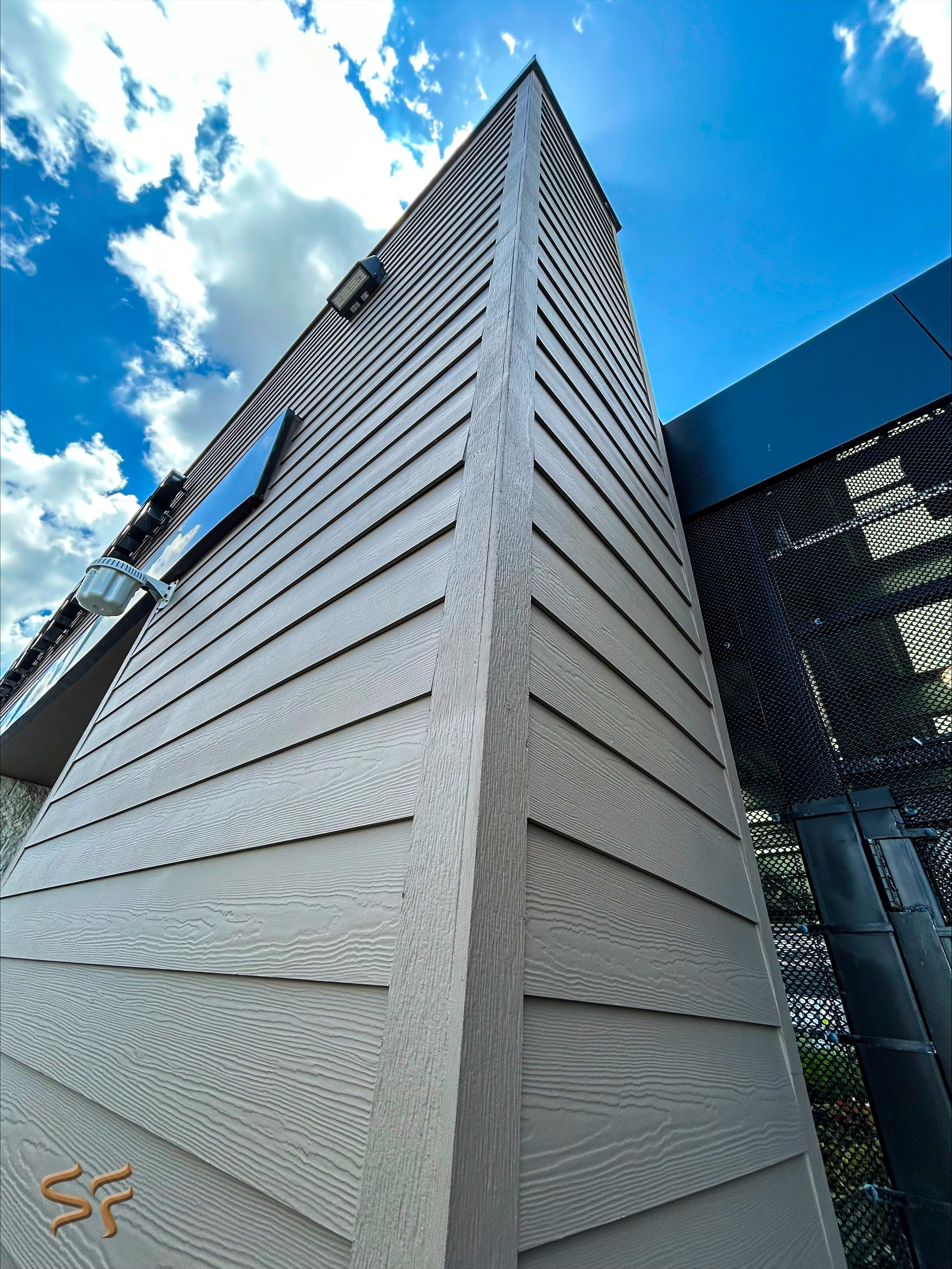
It is a pre-engineered support panel for plastic concrete form liners. Because it is formed to match the liner's pattern, it nests directly behind the liner and holds it in shape during a pour — without hand-fitting strips or blocking into each void.
Yes — specifically, Spec Formliners holds U.S. Patent 9,381,671 for its method of supporting plastic form-liner patterns. Moreover, we were the first to bring a patented backer panel for plastic form liners to market.
Plastic liners are thin, so the pressure of the concrete can push the liner into the recesses of its own pattern. Without support behind those recesses, the liner deflects and distorts the finished surface. A backer panel, therefore, keeps the pattern true.
Traditional backing means cutting and hand-fitting strips into each void before every pour — slow, labor-intensive, and inconsistent. By contrast, the backer panel replaces all of that with one component that installs together with the liner in a single step.
Absolutely. Because the liner and backer fit together perfectly, they can be placed as one assembly and are ready for concrete without extra support. Naturally, this is where much of the time savings comes from.
In many cases, yes. Beyond the labor and material saved by skipping strips and blocking, the liner-and-backer system often costs less than plastic liners made from thicker materials — which may still need backing anyway.
It does. The system works for both single-use and multi-use applications, and it keeps the liner supported and aligned across pours. Consequently, results stay repeatable from one pour to the next.
It integrates with standard forming equipment and adapts to various project scales — including tilt-up beds, precast forms, and cast-in-place formwork. If you have a specific system in mind, our team can confirm the fit and recommend the right setup.
So skip the strips and blocking. Our patented backer panel supports your plastic form liner in one engineered component, so you save time and material while getting a cleaner, more consistent concrete finish. To get started, simply send us your pattern and project details.