Texture, depth, and design continuity built directly into commercial concrete construction — without sacrificing schedule or efficiency.
Architectural concrete has become a defining element in modern commercial construction. What was once treated purely as a structural system is now expected to contribute to the overall appearance, branding, and visual identity of a project.
As tilt-up and cast-in-place construction continue to dominate large commercial developments, concrete walls are no longer hidden behind additional materials or secondary facade systems. They are often the finished surface itself.
Architectural concrete formliners allow developers, architects, and contractors to shape those surfaces directly during construction — introducing texture, depth, and design continuity without sacrificing the efficiency that makes concrete construction so attractive.
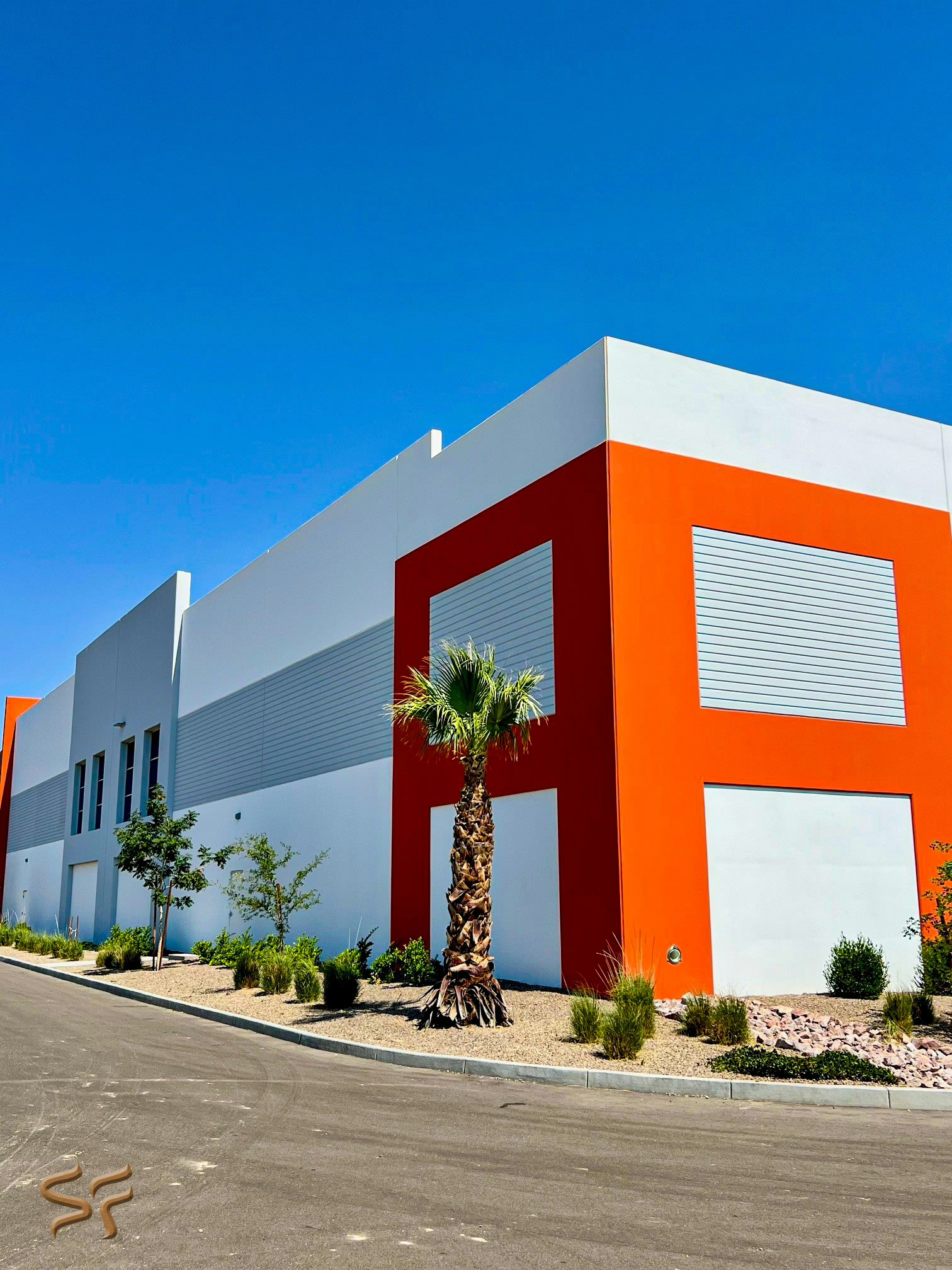
Tilt-up construction remains one of the most efficient methods for delivering large commercial buildings at scale. Its speed and structural simplicity make it especially effective for industrial, retail, logistics, and mixed-use developments where timelines and repeatability matter.
Modern tilt-up buildings are no longer expected to look purely utilitarian. Developers and municipalities increasingly want buildings that feel more integrated into surrounding commercial environments, particularly in high-visibility corridors.
Instead of introducing additional facade materials after panel installation, texture can be formed directly into the tilt-up panel during casting — preserving the efficiency advantages of tilt-up construction while delivering an intentional architectural appearance.
Because the texture is formed directly into the concrete, the appearance remains consistent long after construction is complete — without relying on coatings, veneers, or applied finishes that may deteriorate over time.
Although tilt-up and cast-in-place construction are often grouped together, they create very different architectural conditions. Formliners can adapt to both approaches — but the design intent often changes depending on the construction method.
One of the biggest challenges in commercial concrete construction is preserving design consistency across very large structures. Minor differences in texture alignment, finish quality, or panel sequencing can become highly visible once a project is assembled.
Formliners help control that consistency at the production level rather than relying on field-applied finishes later in the process. Because the texture originates in the formwork itself, the final appearance is more predictable from panel to panel and pour to pour.
Many commercial developments eventually expand into multi-building campuses where visual continuity matters just as much as structural performance. Establishing texture and architectural language early allows future phases to remain connected without redesigning the entire system.
Commercial buildings experience constant exposure to traffic, weather, maintenance equipment, and environmental wear. Surfaces that require repainting, refinishing, or regular repairs can quickly increase operational costs over the life of the property.
Architectural concrete formliners reduce many of those concerns because the finish is integrated directly into the concrete itself — not applied on top of it.
One of the biggest misconceptions in commercial concrete construction is that architectural detail automatically creates complexity. When texture and finish are integrated directly into the forming process, many projects actually become simpler — not more complex.
Whether used in tilt-up panel systems, cast-in-place walls, or large commercial facades, the right formliner system helps create durable architectural finishes that scale efficiently across modern construction projects.