Concrete infrastructure is everywhere — lining highways, carrying bridge loads, holding back hillsides, and enclosing freeway corridors. Most of it goes largely unnoticed, which is exactly the problem. Today, architectural concrete formliners are the standard tool for converting structural concrete into infrastructure that communities accept, respect, and in some cases, take pride in. This guide covers the four primary applications where formliners deliver the most value — and what each one actually demands.
Why Infrastructure Concrete Needs More Than a Smooth Surface
The case for textured concrete on public infrastructure isn't just aesthetic — though aesthetics matter more than engineers sometimes want to admit. There are hard, practical reasons why DOT agencies, civil engineers, and precasters increasingly specify architectural concrete formliners on highway and transit work.
Highway Sound Walls & Noise Barriers
The highest-profile formliner application in transportation infrastructure
Highway sound walls sit directly adjacent to the communities they're supposed to protect. They're large, visible, and historically among the most contested infrastructure elements in the public approval process. The fundamental tension is obvious: a wall tall enough to meaningfully reduce traffic noise is also tall enough to feel oppressive, industrial, and divisive to the neighborhoods it borders.
Formliners resolve that tension by embedding design directly into the structure during construction. Rather than building a blank wall and applying a decorative treatment afterward — at additional cost, with additional maintenance liability — the architectural texture is cast integrally into the concrete panels. The result is a durable, maintenance-free surface that can replicate natural stone, timber, brick, geometric patterns, or fully custom community motifs at highway scale.
What Sound Wall Projects Demand
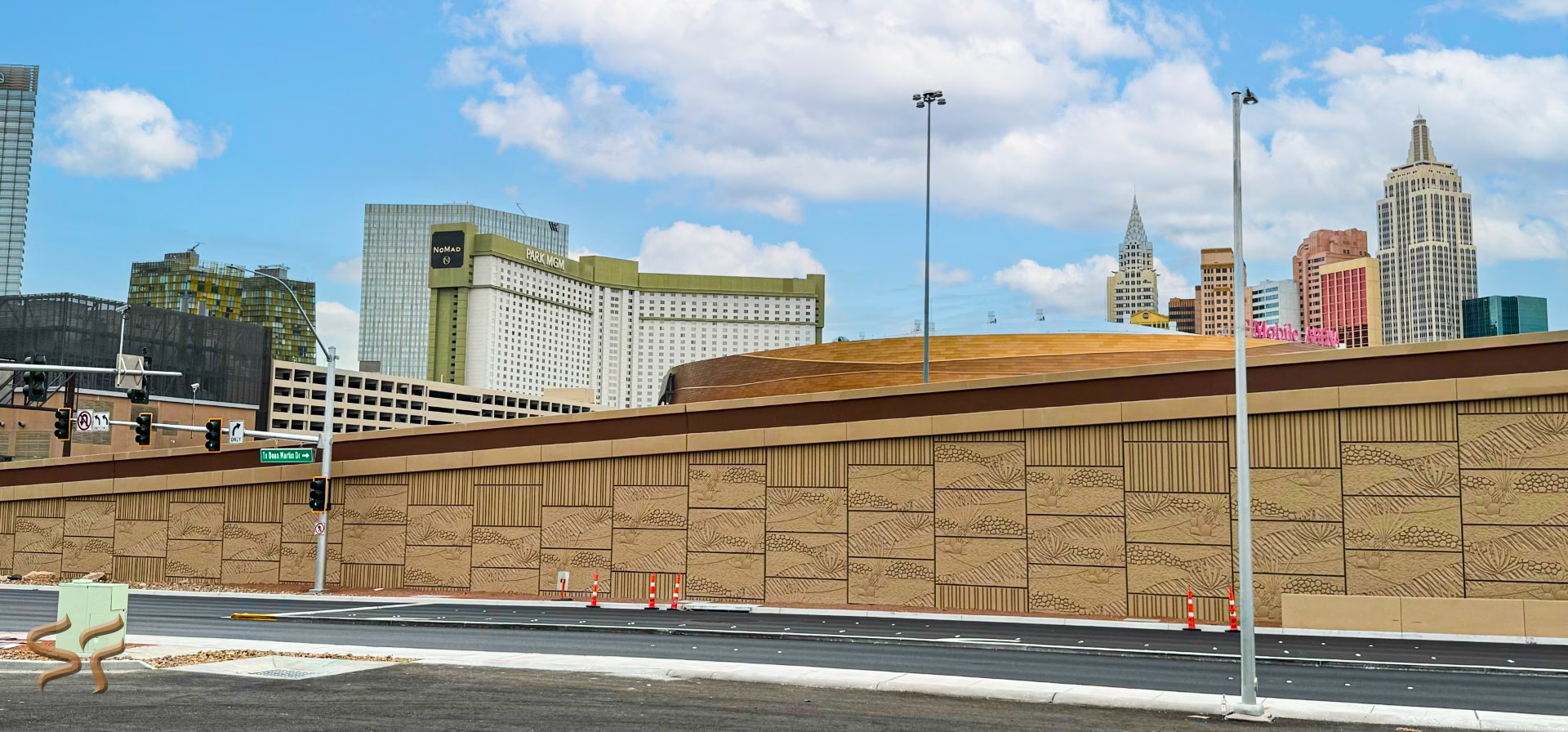
Highway noise barriers routinely span thousands of linear feet — sometimes miles — of continuous wall face. The formliner pattern must tile, repeat, and align seamlessly across hundreds of panels without visible breaks or pattern fatigue. Pattern selection needs to account for driver perception at speed: a pattern that looks compelling at 6 feet looks very different from a vehicle traveling at 65 mph.
Many DOT aesthetic programs require patterns that reflect the surrounding community's character, history, or natural environment. A sound wall through a desert corridor might incorporate regional wildlife or geological formations. A wall adjacent to a historic neighborhood might reference local architectural heritage. Custom formliners convert what would have been a contested project into a public asset.
Sound walls must perform for decades under highway-grade environmental exposure: continuous UV radiation, freeze-thaw cycling, highway spray, deicing chemicals, and the mechanical stress of traffic vibration. Elastomeric urethane formliners — rated for 25+ uses, dimensionally stable under high pour pressures — are the standard for sound wall applications.
Most state DOT aesthetic programs require formliner patterns to be reviewed and approved before incorporation into construction documents. In community-impact cases, patterns go through an independent aesthetics review board or municipal review. Pattern selection cannot be a last-minute decision — the approval process takes weeks, sometimes months.
Rock and natural stone textures (Random Ashlar, Drystack, Boulder) are the most frequently specified sound wall patterns — they read naturally at highway scale and diffuse both light and graffiti spray effectively. Fractured fin and geometric patterns work well in urban and transit corridors. For fully custom work, CNC-milled master patterns can translate any community-approved design into a production-ready formliner system.
Bridge Abutments & Wingwalls
Gateway structures with the most demanding pour conditions in infrastructure
Bridge abutments and their associated wingwalls occupy a specific visual position in the transportation landscape. They're not as expansive as a multi-mile sound wall system, but they're often more prominently visible and more closely scrutinized by the public. A bridge abutment sits at a gateway — where a road passes under or over a structure — and its appearance communicates something about the quality of the infrastructure investment.
Bare, unfinished abutment concrete reads as institutional and neglected. An abutment finished with a deep-relief stone or fractured texture reads as intentional and well-crafted.
What Bridge Abutment Projects Demand
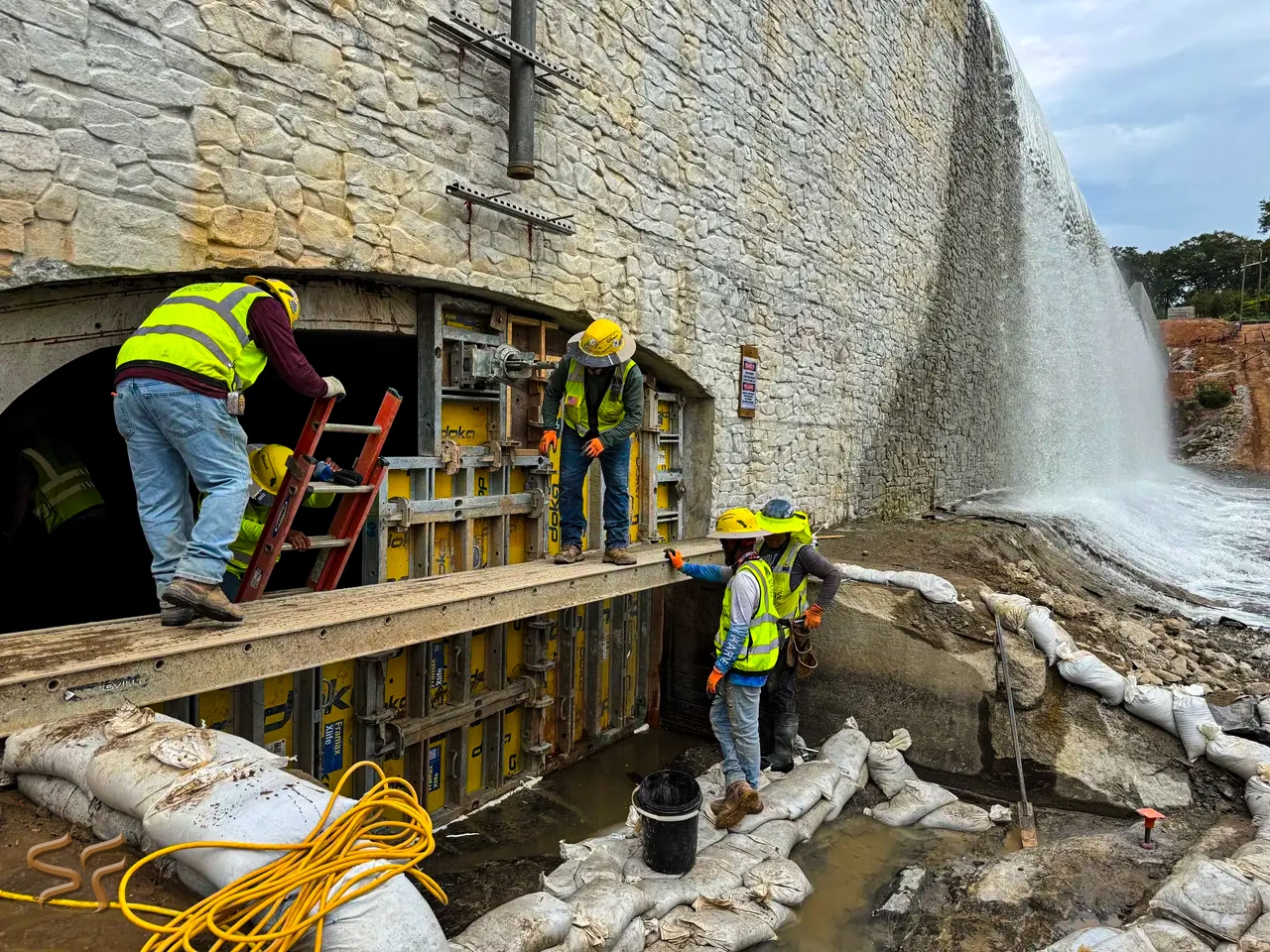
Abutment and wingwall construction presents the most demanding structural environment for formliner applications. The pour pressures involved are among the highest in any infrastructure application — hydrostatic loads that can deform, displace, or permanently damage liner materials that aren't engineered for those conditions. Elastomeric urethane bonded to ¾" plywood backing is the correct specification.
Bridge wingwalls are rarely simple vertical planes. They transition from the abutment face to the roadway embankment at angles, slopes, and curves that require a formliner material flexible enough to conform to geometry without tearing or losing pattern definition at the edges. Elastomeric urethane's inherent flexibility makes it the only practical choice for wingwall applications with significant geometric complexity.
The finished surface of a bridge structure typically spans multiple concrete elements — the abutment face, wingwalls, potentially a connecting retaining wall — that are formed separately and assembled into a continuous visual system. Maintaining pattern alignment and surface consistency across those transitions requires careful planning, precise panel layouts, and consistent liner installation.
Formliners on bridge abutments are subjected not only to vibration during concrete consolidation, but to the ongoing vibration transmitted through the structure from traffic loads over the structure's lifetime. Elastomeric materials that maintain bond integrity under repeated dynamic loading are the appropriate specification for these conditions.
Stone patterns — particularly deep-relief random rock and fractured textures — are most frequently specified for bridge abutments because they provide visual weight appropriate to the structural scale and integrate naturally with vegetated embankments and natural landscapes. In urban corridors, contemporary geometric patterns and board-formed wood grain align with the architectural context of adjacent commercial and civic development.
Retaining Walls & MSE Walls
The highest-volume formliner application in DOT infrastructure
Retaining walls and Mechanically Stabilized Earth (MSE) walls represent the highest-volume formliner applications in DOT infrastructure. A single highway project may require hundreds of individual MSE panels, each requiring the same formliner pattern applied consistently across the entire wall face. At that scale, the economics of formliner selection, the efficiency of the production process, and the consistency of the finished surface quality are all critical to project performance.

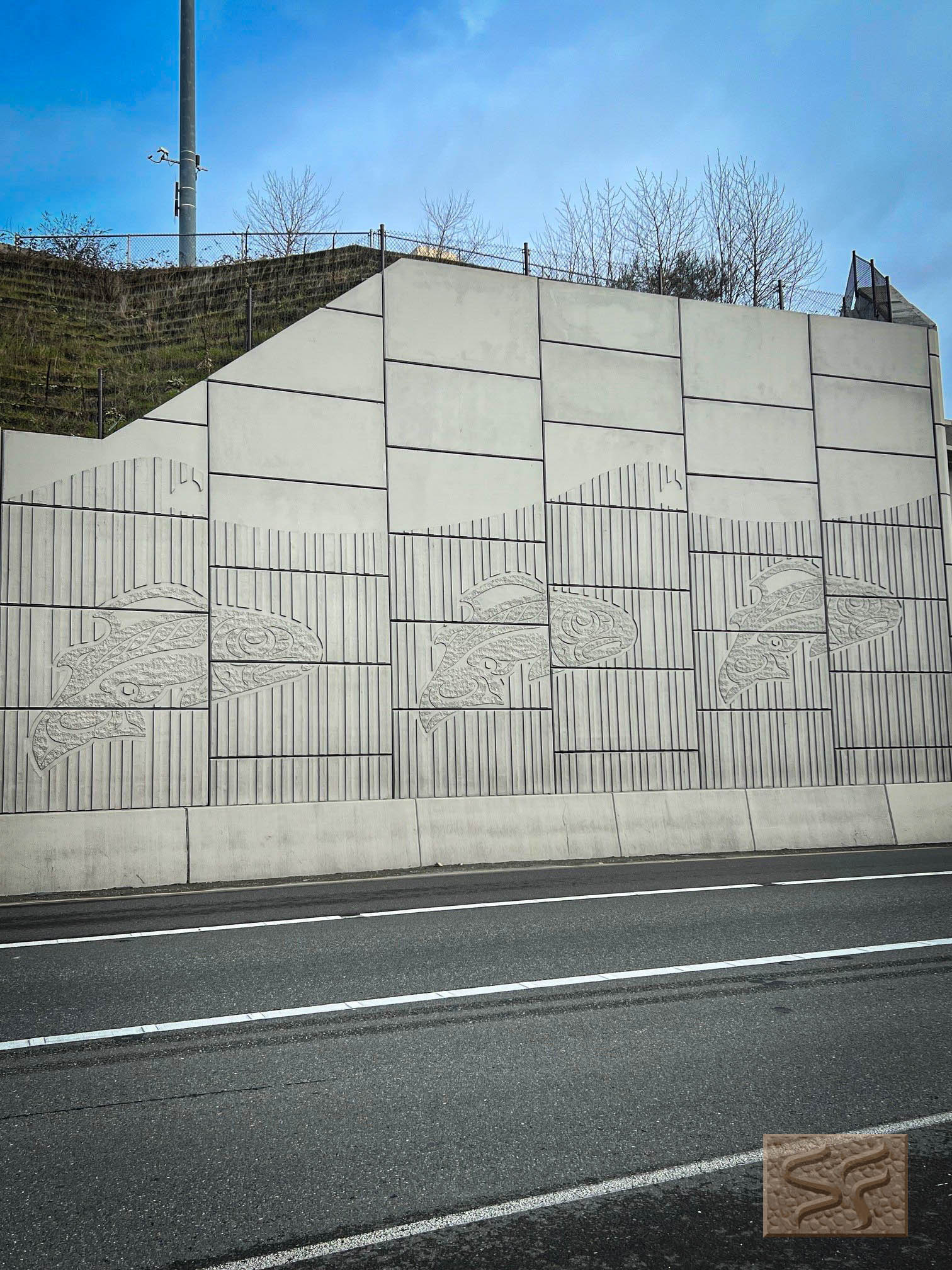
What Retaining Wall & MSE Projects Demand
An MSE wall spanning a quarter-mile of highway corridor might require 200 to 500 individual precast panels. A precaster running production at that scale needs a formliner system that delivers consistent results across the full panel count without degradation in pattern detail or surface quality. High-reuse elastomeric liners — rated for 25+ uses — are the production standard for high-volume MSE work.
When hundreds of panels are assembled into a continuous wall face, any variation in texture depth, surface finish, or pattern alignment becomes immediately visible. Formliner systems that maintain dimensional consistency across their full reuse life — and that are manufactured to tight tolerances in the master pattern — are essential for producing wall systems that look as continuous at 500 feet as they do at 5 feet.
Retaining wall panels are produced in standardized sizes, but the formliner pattern must be engineered to align across panel joints so the assembled wall presents a continuous, seamless texture. This requires coordination between the panel layout design, the formliner panel size, and the pattern repeat — all of which must be resolved before production begins, not during it.
Not all retaining walls are precast. Cast-in-place concrete retaining walls along highway corridors are common in applications where site conditions, access constraints, or structural requirements favor in-place construction. Formliner systems for cast-in-place applications must be designed for attachment to standard formwork systems and for repeated stripping and reuse across successive lifts.
Stacked stone, random rock, and fractured patterns are the workhorse specifications for retaining walls — they visually reference the earth-retention function of the structure and integrate naturally with graded highway embankments. Horizontal board-formed patterns work well in contemporary commercial corridors. For high-profile gateway structures, custom art motifs cast into the MSE panel face convert infrastructure into civic art at no additional structural cost.
Freeway Underpasses
Enclosed, close-range environments where surface quality is most visible
Freeway underpasses are a different kind of infrastructure environment — enclosed, intensely experienced, and in constant close-range view of everyone who passes through them. Unlike a highway sound wall perceived at 65 mph from inside a vehicle, an underpass is experienced at lower speeds, often on foot, and at distances of a few feet rather than a few hundred.
That proximity changes everything about the design requirements. Surface quality, pattern detail, and texture definition that would be imperceptible on a distant sound wall are fully visible and tactile in an underpass environment.
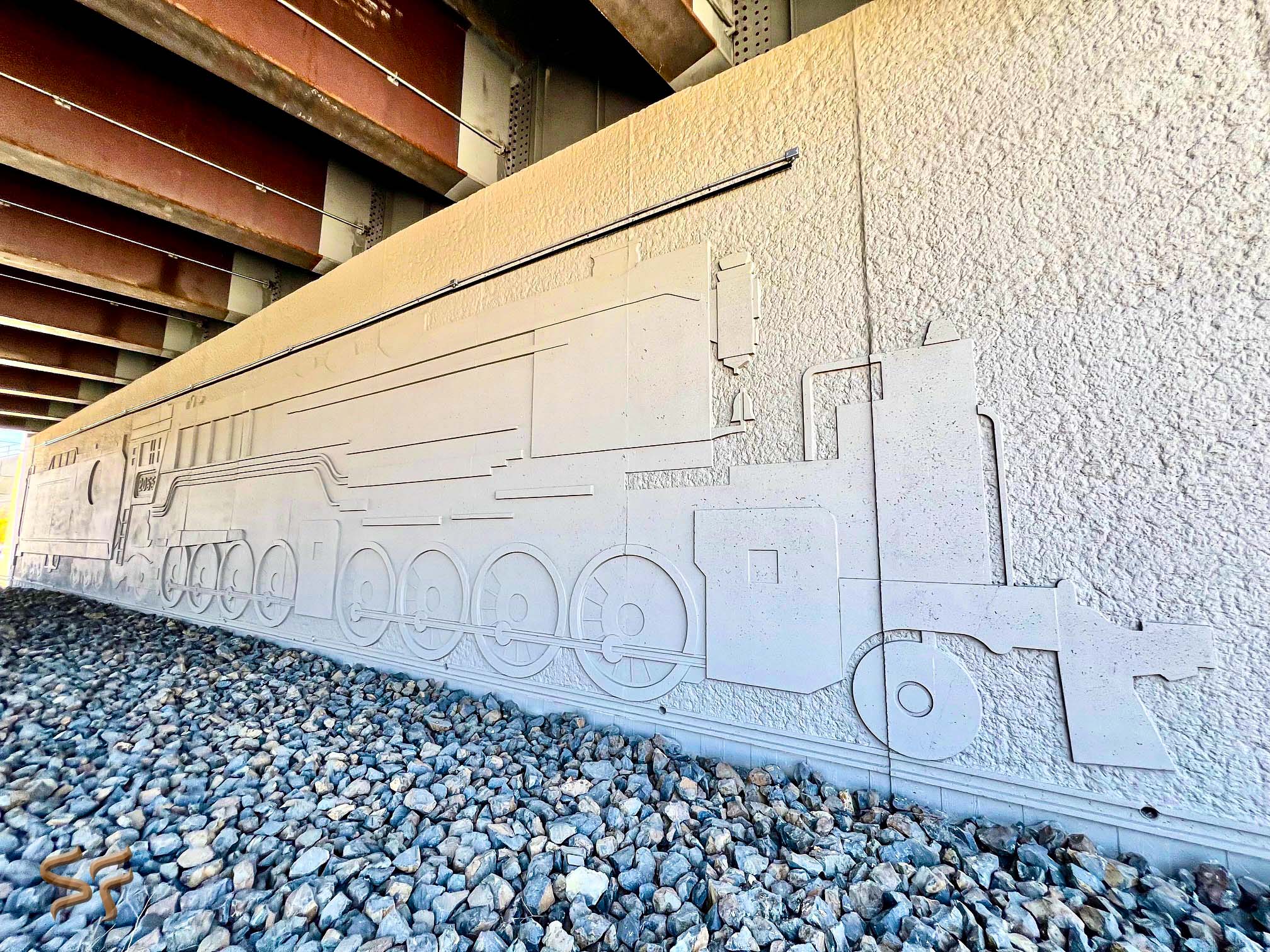
What Underpass Projects Demand
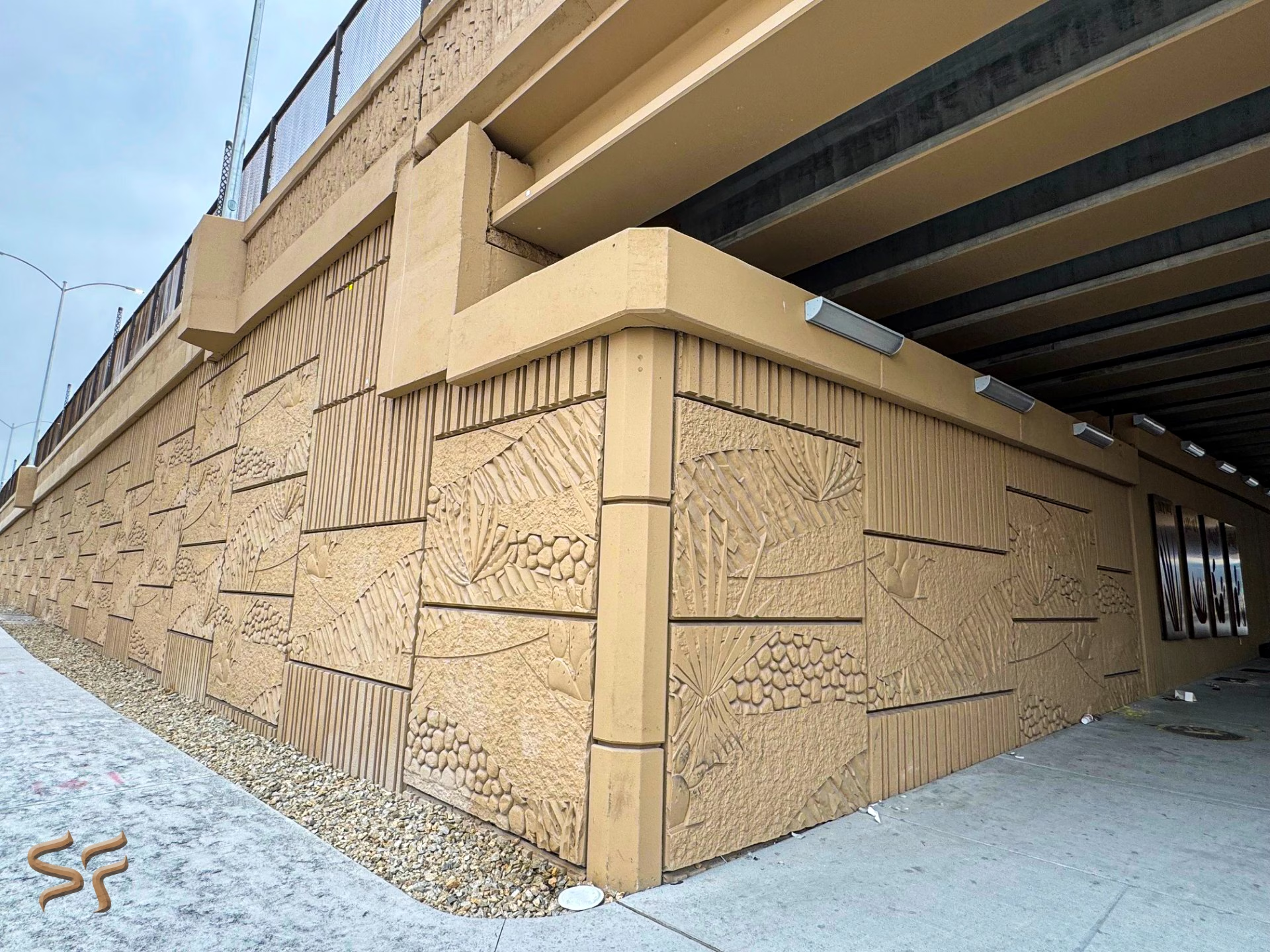
The deep-relief, high-definition texture capability of elastomeric formliners is most visibly rewarded in underpass applications, where the finished surface is examined at close range by pedestrians, cyclists, and slow-moving vehicles. A 1½" fractured fin pattern that reads as a clean linear texture from a highway produces dramatic shadow and depth in the confined visual environment of an underpass structure.
Underpass environments concentrate road spray, vehicle exhaust, and surface water runoff in an enclosed space. The concrete surface is exposed to more concentrated moisture, deicing chemical residue, and atmospheric contamination than open-air infrastructure. Integrally cast formliner textures requiring no applied coating are better suited to these conditions than surfaces depending on maintained coatings for performance.
Freeway underpass aesthetic programs frequently combine formliner textures with integral color admixtures or acid staining programs to create bold, visually engaging environments. The interaction between deep formliner relief and integral color or staining — where the peaks and valleys of the pattern hold and release pigment differently — produces layered visual effects that transform uninviting infrastructure into an experience worth noticing.
Underpasses are among the highest-risk locations for graffiti on transportation infrastructure. They're shielded from view, accessible on foot, and historically treated as blank canvases by taggers. Deeply textured formliner patterns — combined with anti-graffiti coatings that penetrate irregular textured surfaces more effectively than smooth ones — dramatically reduce both the occurrence and the visibility of vandalism.
Fractured fin patterns, bold geometric textures, and high-contrast directional patterns perform particularly well in underpass environments because they maximize the shadow and depth that defines the visual character of the space. Custom art panels — murals, community iconography, regional imagery — are increasingly specified for underpass structures in urban transit corridors where the goal is to convert a difficult urban space into a public amenity.
Choosing the Right Formliner for Each Application
Across all four infrastructure applications, formliner selection follows the same core decision framework. Three variables drive the decision:
What All Four Applications Have in Common
Despite their different structural functions, visual environments, and performance demands, sound walls, bridge abutments, retaining walls, and freeway underpasses share one fundamental characteristic:
They are all permanent, publicly visible expressions of infrastructure quality. They're seen by the same communities that approve or oppose project funding. They're maintained by the same agencies responsible for the long-term cost of the transportation system. And they're experienced by the same drivers, pedestrians, and residents who form opinions about public investment in their environment.
Formliners don't just change the appearance of these structures. They change how communities relate to them — converting infrastructure that generates resistance into infrastructure that earns acceptance, or in the best cases, genuine public appreciation.
Built to Spec. Built to Last.
With manufacturing facilities in Santa Ana, CA and St. Clair, MO, Spec Formliners supports infrastructure projects of every scale across the United States and Canada — from single bridge abutment specifications to multi-mile highway sound wall programs requiring thousands of panels.
Our in-house CAD design, CNC machining, and thermoforming capabilities mean that whether a project calls for a standard fractured rock pattern or a fully custom community mural, the result will be consistent, durable, and built to outlast the structure it finishes.
Highway sound barriers no longer have to divide communities. With the right formliners, they can reflect them.
Working on an Infrastructure Project?
Contact the Spec Formliners team for pattern consultation, material recommendations, DOT compliance review, or to request a free sample.