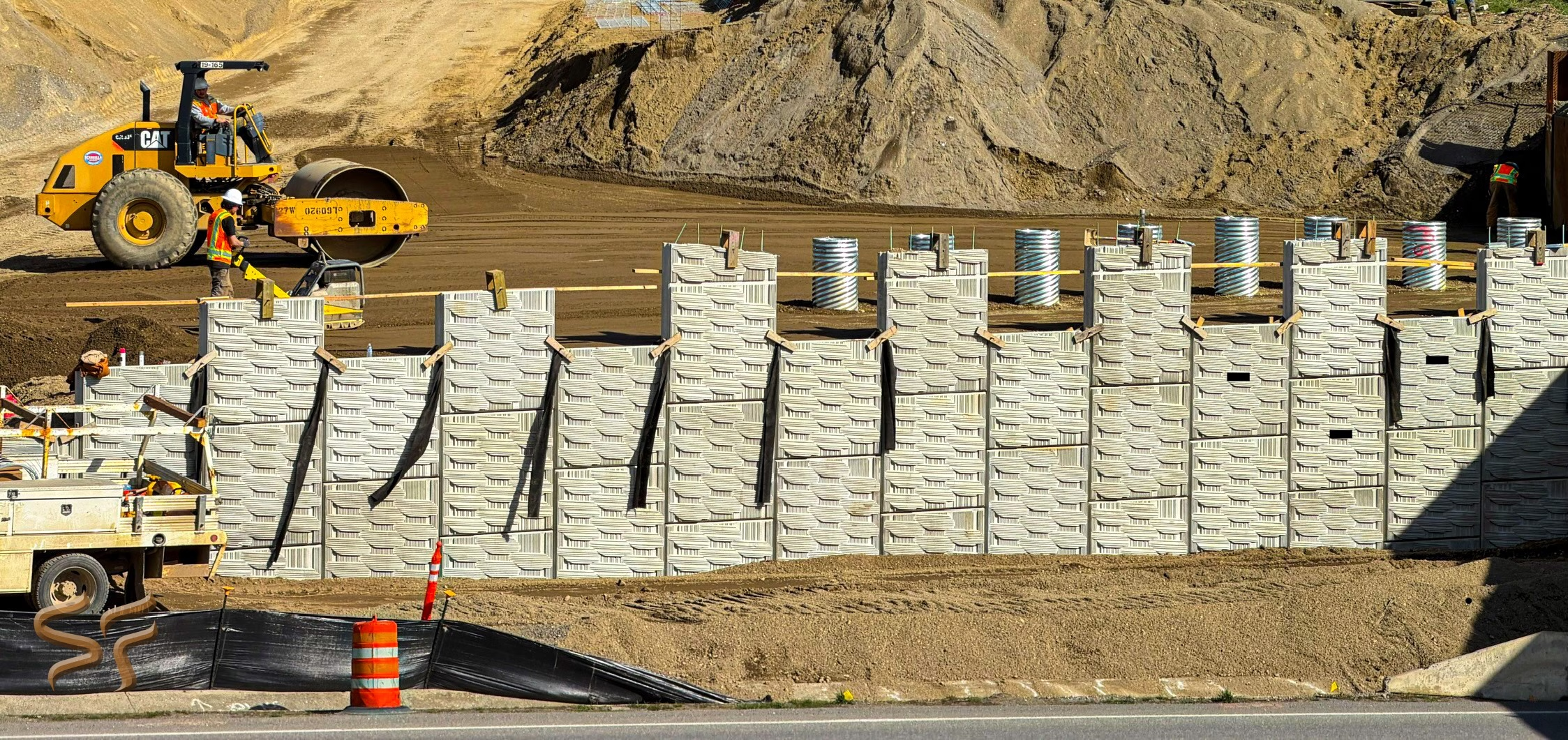
Not long ago, a truly custom concrete texture — a community mural cast into a highway wall, a building facade replicating the exact grain of a specific wood species, a bridge abutment bearing a regional art motif — was either extraordinarily expensive, prohibitively time-consuming, or both. Digital modeling and CNC routing have changed that equation entirely. What was once the exclusive domain of landmark projects with landmark budgets is now accessible, repeatable, and precise at any scale.
Before CNC: How Custom Formliners Used to Be Made
To understand what CNC technology changes, it helps to understand what came before it. For most of the history of architectural concrete, custom formliner master molds were produced one of two ways: by hand-sculpting from physical materials, or by casting impressions from objects found in nature.
Hand-sculpting — carving a master mold from plaster, clay, foam, or wood — is skilled craft work. An artisan would translate a design concept into a three-dimensional physical object, working iteratively until the result matched the design intent. For simple geometric patterns or natural textures with organic irregularity, this approach produced good results. For complex, precise, or highly detailed designs — logos, architectural motifs, figurative imagery, or patterns that needed to repeat exactly across hundreds of panels — hand-sculpting introduced limitations that were difficult to overcome.
What It Couldn't Do Well
- Reproduce exact client-supplied artwork at precise scale
- Guarantee identical pattern geometry across multiple master molds
- Incorporate fine linework, text, or crisp geometric edges
- Turn around design revisions without rebuilding physical tooling
- Document the master mold as a replicable digital file
- Hold sub-millimeter tolerances on relief depth and surface geometry
What CNC Delivers
- Exact digital-to-physical translation of any approved design file
- Bit-for-bit identical master molds from the same digital source
- Crisp edges, fine detail, and complex geometry machined in a single pass
- Design revisions made in the file, not in the physical material
- Every master mold documented and archivable as a digital asset
- Consistent relief depth and surface tolerances across the full mold area
The cost and time implications of those limitations were significant. A complex custom design might require weeks of artisan labor to produce a single master mold. If the client requested a change after reviewing a physical sample, the mold often had to be rebuilt from scratch. If a second identical mold was needed mid-project, reproducing it by hand introduced variation. None of those problems are acceptable at the scale and schedule demands of modern infrastructure and commercial construction.
How CNC Routing Changes the Manufacturing Process
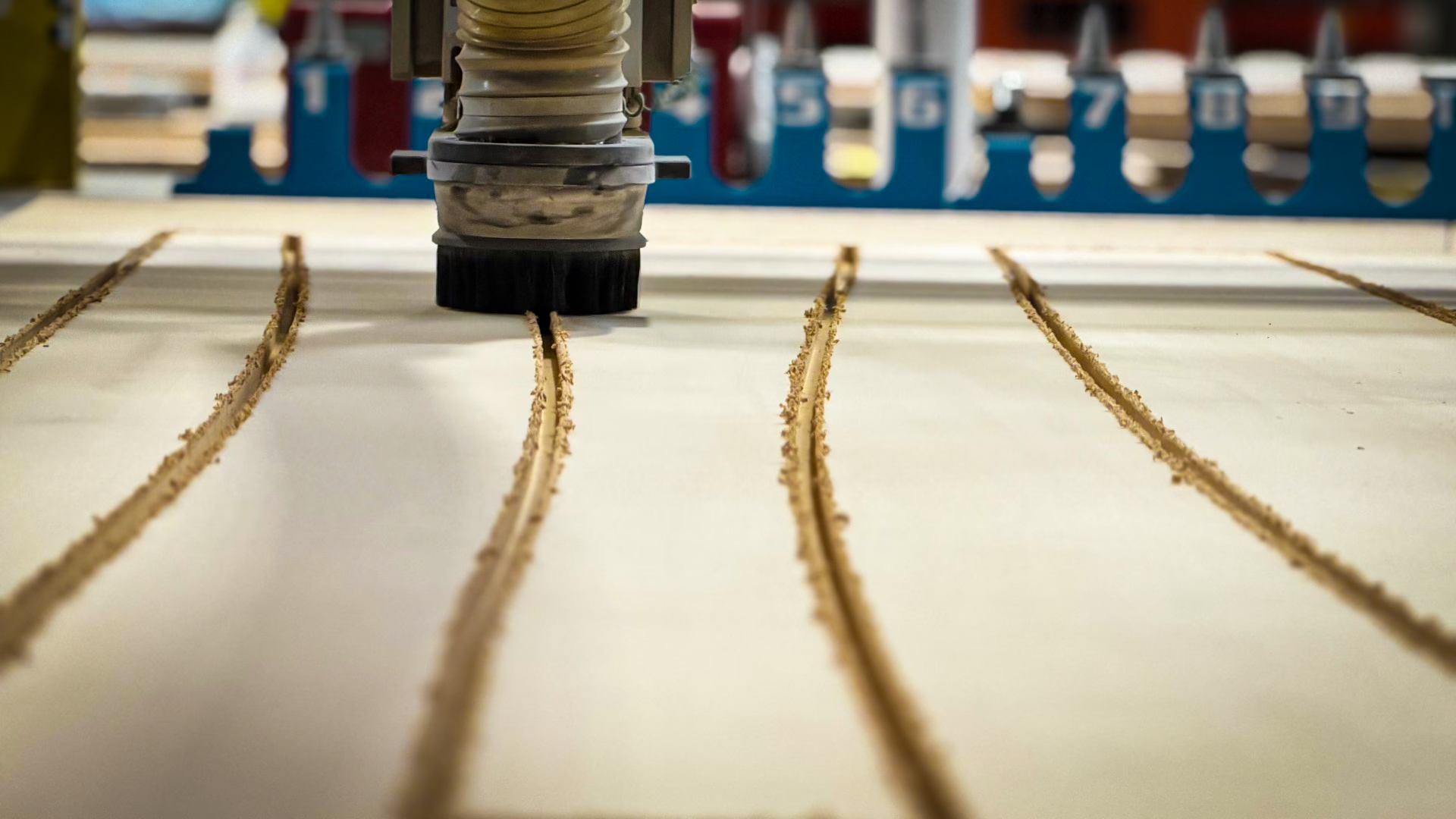
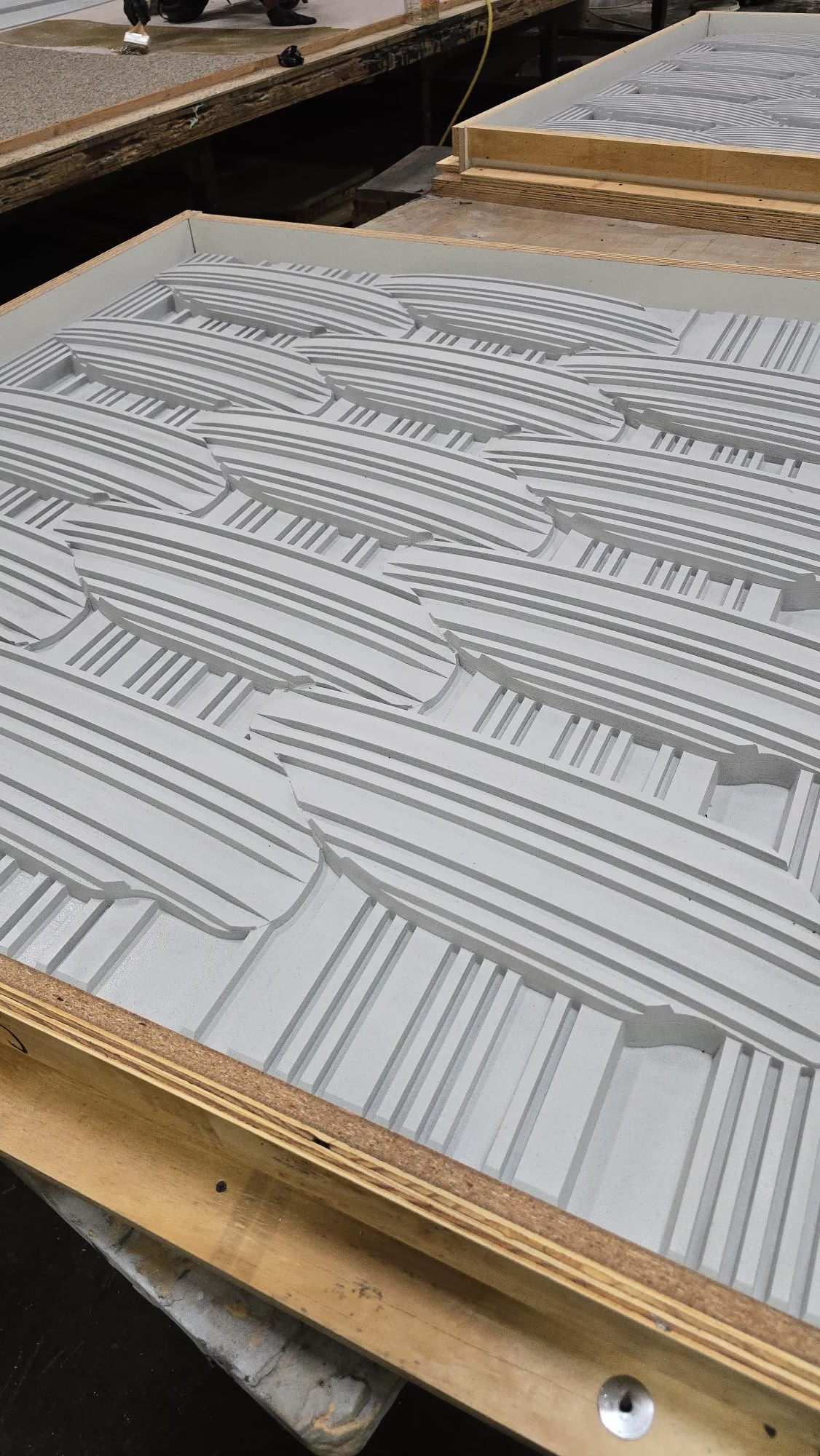
CNC — Computer Numerical Control — machining is a subtractive manufacturing process in which a computer-controlled cutting tool removes material from a workpiece according to a precise digital program. In the context of formliner manufacturing, the workpiece is typically a high-density polyurethane board or similar machinable substrate, and the output is a master mold from which the production formliner is cast.
The critical shift CNC introduces is the elimination of interpretation between design intent and physical output. When a designer creates a pattern in 3D modeling software and that file is loaded directly into a CNC router, the machine executes the design exactly as specified — down to tolerances measured in thousandths of an inch. There is no translation loss, no hand interpretation, no accumulated error from a craftsperson working from a sketch.
The Digital-to-Concrete Workflow
From a client's concept to a finished textured concrete surface, the CNC-enabled process moves through five distinct stages — each one tighter and more controllable than the equivalent step in a traditional hand-fabrication workflow.
The process begins with a review of the client's design intent — artwork, architectural drawings, sketch concepts, reference images, or CAD files. At Spec Formliners, the design team assesses constructability, recommends relief depth and scale adjustments that will translate effectively into concrete, and flags any elements that need to be simplified or adapted for the physical casting process. Changes made at this stage cost nothing. Changes made after mold production cost significantly more.
The approved concept is translated into a full three-dimensional digital model in CAD software. This model defines every surface, every relief depth transition, every edge, and every seam in the finished formliner. For organic textures like stone or wood grain, this step involves sculpting the digital model to capture the natural variation that gives the pattern its authenticity. For geometric or figurative designs, it involves precise dimensional drafting. The digital model is what the client approves before any physical material is cut.
The 3D model is presented to the client — and in DOT or public infrastructure contexts, to the relevant agency review board — for approval before machining begins. Clients can visualize the finished pattern, evaluate the relief depth and proportions, and request modifications to the digital file. This review step eliminates the need to physically build a sample just to discover a design issue. Revisions are made in the model, re-rendered, and re-submitted until sign-off is achieved.
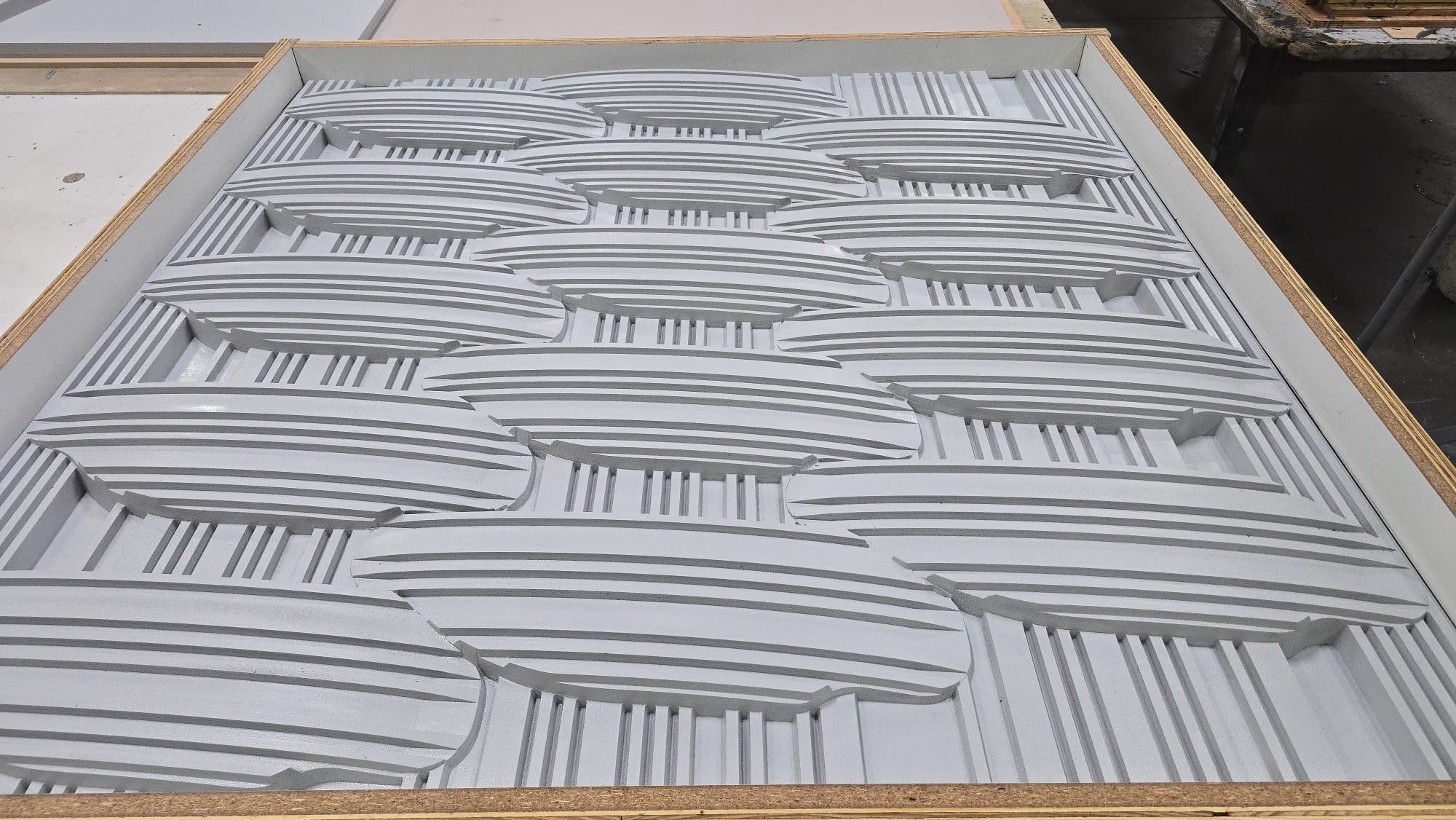
Once the digital model is approved, it's converted into machine code and loaded into the CNC router. The machine cuts the approved design into the substrate material — typically a high-density machinable board — replicating the digital model with sub-millimeter precision. The finished master mold is an exact physical representation of the approved digital design, ready for quality inspection and formliner casting. Multiple identical molds can be machined from the same file for high-volume production runs.
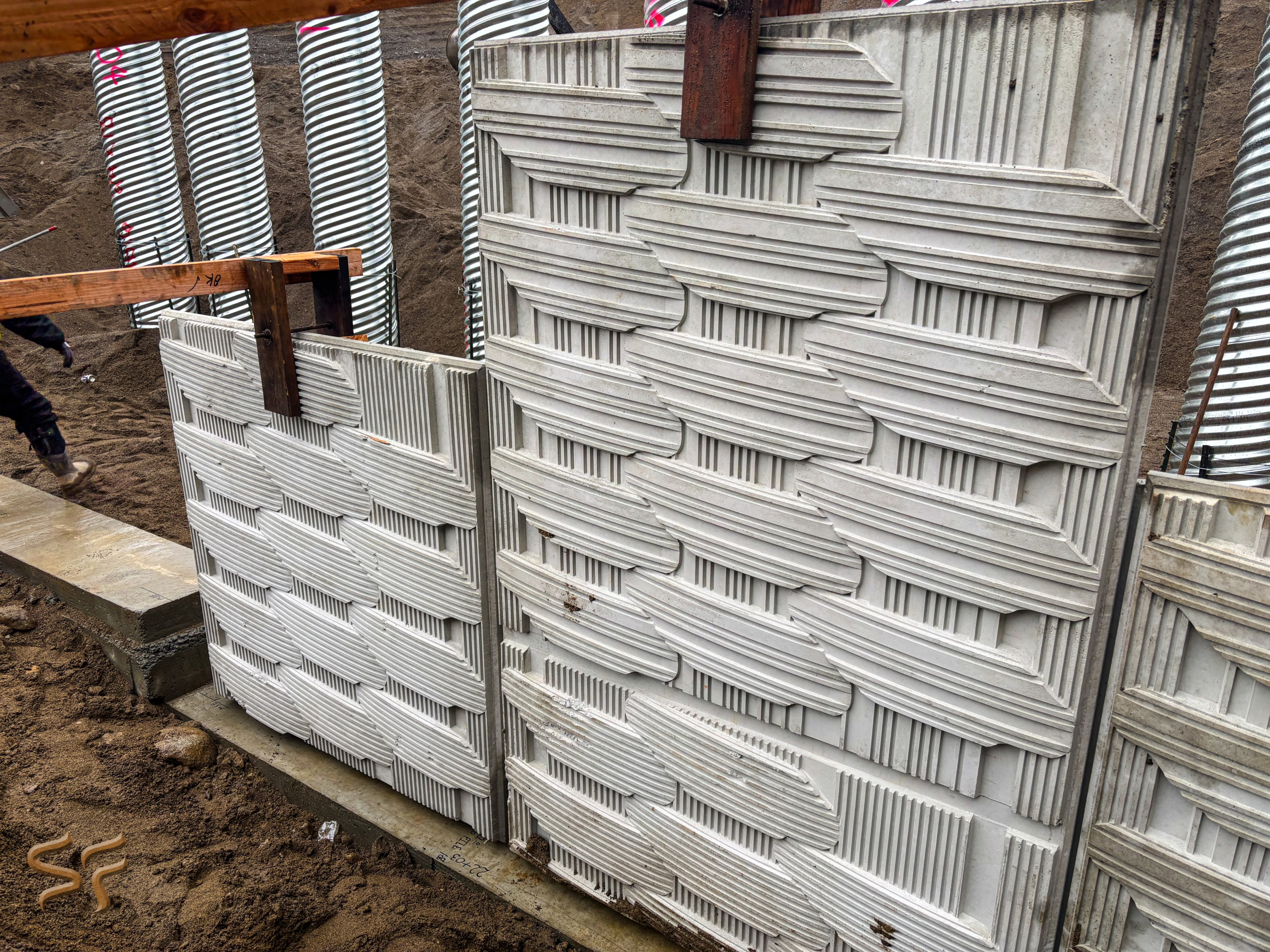
The master mold is used to cast the production formliner — typically in polyurethane for elastomeric DOT-grade applications. The finished formliner is inspected against the digital model and the approved design specification before shipping. Because the dimensional accuracy of the CNC master mold is verifiable against the original file, any deviation in the finished formliner is identifiable and correctable before the product leaves the facility.
What's Now Possible That Wasn't Before
CNC technology doesn't just make the existing range of custom formliner designs faster and cheaper to produce. It opens categories of design that were previously impractical or entirely off the table.
The practical effect of CNC capability is that the conversation between designer and manufacturer has fundamentally changed. Where a designer once asked "what patterns do you have?", they can now ask "what do you want it to look like?" — and expect a manufacturable answer. Custom is no longer a premium exception. It's a standard capability.
Design Review & Client Approval: The Biggest Workflow Advantage
Of all the advantages CNC technology introduces to the custom formliner process, the most underappreciated is what it does to the design approval workflow — particularly on public infrastructure projects where DOT agency review, community input, and multiple layers of design sign-off are required before production can begin.
In a traditional hand-sculpted workflow, the review process often required the manufacturer to produce a physical sample panel before the client or agency could make a final decision. That sample cost time and material to produce, and if the agency wanted changes, the mold had to be reworked or rebuilt — burning more time and budget before a single production panel was cast.
With a digital-first workflow, clients review and approve the 3D model before any physical material is cut. Modifications are made to the digital file — not to a physical mold. The entire iteration process happens in the model, at a fraction of the cost and time. When the design is finally approved and the CNC machine runs, the output is exactly what was signed off on — no surprises, no rework, no recast samples.
For DOT projects that require formal pattern pre-approval — including agency review, aesthetics board sign-off, and community stakeholder input — the ability to present a photorealistic 3D rendering of the finished concrete surface before any tooling is built is a significant practical and political advantage. Communities can visualize what they're approving. Agencies can review dimensional compliance against specifications. And everyone signs off on the same digital record that drives production.
Where CNC Custom Formliners Deliver the Most Value
CNC capability applies across virtually every formliner application, but some project types benefit more than others from the precision and flexibility it provides.
CNC at Spec Formliners
Spec Formliners has operated in-house CNC machining capabilities as a core part of its manufacturing process for years — not as a specialty service, but as the standard method for producing master molds for custom and standard formliner patterns alike. The integration of CNC into our production workflow is what allows us to offer the quality control, repeatability, and lead time performance that infrastructure and architectural projects require.
Our In-House Digital Design & CNC Capabilities
The result of this integrated approach is a custom formliner process where the finished concrete surface is identical to what the client approved digitally — not an approximation of it. For projects where the design is the point, that precision matters.
Have a Custom Concrete Texture in Mind?
Bring us your concept — artwork, architectural drawings, or a sketch — and we'll show you what's possible with in-house CAD design and CNC manufacturing.