Winning a DOT contract is one thing. Executing it without a rejected panel or a costly change order is another. For contractors and precasters working on publicly funded transportation infrastructure, formliner selection isn't a design preference — it's a compliance requirement.
Why DOT Formliner Specs Are Different from Commercial Specs
Commercial architects and private developers typically specify formliners by pattern and aesthetic outcome. They want a stone texture. They want wood grain. They want a fractured fin. The material type is often left to the contractor or precaster to determine, as long as the surface result meets the design intent.
DOT specifications work differently. Transportation agencies are responsible for infrastructure that serves the public for 50 to 100 years. The surfaces they specify must perform reliably under conditions that would destroy lesser materials: continuous traffic vibration, freeze-thaw cycling, UV exposure, deicing chemicals, wind-driven debris, and pressure washing during maintenance.
DOT formliner specifications go beyond aesthetics. They define material type, minimum reuse requirements, texture relief depth, surface quality tolerances, installation methodology, and in many cases, require pre-approved manufacturer qualifications. A project with a DOT elastomeric formliner spec is not satisfied by a plastic liner, a foam liner, or an off-brand urethane product that hasn't been tested in the field at scale.
Understanding what agencies require — and why — is the first step to executing DOT infrastructure work without surprises.
The Core Material Requirement: Elastomeric
The most common and critical material requirement written into DOT formliner specifications is elastomeric — and it's non-negotiable on most heavy highway and infrastructure work.
Elastomeric formliners are manufactured from polyurethane compounds that remain flexible across a wide temperature range, resist compression set under high concrete pour pressures, and recover their original shape after stripping. DOT agencies mandate them for four core reasons:
Reuse, Relief Depth, and Pattern Consistency
Beyond material type, DOT specifications commonly address three technical formliner performance criteria. All three directly affect compliance and cost.
A surface that shows obvious variation in texture depth, sharpness, or pattern alignment from section to section will be flagged during inspection. Liners with inconsistent urethane density, poor backing bond, or dimensional variation from the master pattern introduce surface variation that accumulates across a large project.
DOT Infrastructure Applications and What Each One Demands
Not all infrastructure applications have identical formliner requirements. Here's how the major DOT project types differ.
How DOT Pattern Approval Works
One aspect of DOT formliner work that surprises contractors new to public infrastructure is the pattern pre-approval process.
Most state DOT aesthetic programs require that formliner patterns be reviewed and approved by the agency — and in community-impact cases, by an independent aesthetics review board or the affected municipalities — before they can be incorporated into construction documents. This process exists to ensure that the visual treatment of public infrastructure meets community standards and integrates with the surrounding environment.
For contractors, this means pattern selection cannot be a last-minute decision. The typical pre-approval process involves:
Select from the agency's pre-approved pattern library or propose a custom pattern. Submit physical sample panels for agency review — custom or community-specific motifs may require a review process that takes weeks.
Many agencies require a sample panel cast in concrete using the proposed formliner before granting approval. This confirms the pattern translates correctly at full scale and meets relief depth specifications.
Provide pattern layout drawings showing seam placement, panel dimensions, and joint alignment. DOT engineers review to ensure the pattern layout meets the continuous wall consistency requirement.
Once the agency approves the pattern, material, and layout, the approved product is locked into the specification. Working with a manufacturer that agencies already recognize dramatically accelerates this step.
Common Spec Mistakes That Get Contractors Rejected
After decades of supporting DOT infrastructure projects across the United States, there are clear patterns in where contractors run into trouble.
This is the most common compliance failure. A project spec calls for an elastomeric formliner. The contractor uses a plastic liner because it's cheaper. The surfaces are inspected, the material doesn't meet spec, and panels are rejected. The cost of rework and delay far exceeds whatever was saved on the liner.
Contractors pull a pattern from a library that matches the described aesthetic and order it without confirming the relief depth meets the specification minimum. A rock pattern at ¾" relief is a different product than the same rock pattern at 1½" relief. Spec confirmation before ordering is essential.
On projects with a pre-approved pattern list, using a pattern that isn't on the list — even if it looks similar — can result in rejection. Always verify pattern approval status with the agency before ordering.
DOT specifications for continuous wall systems frequently define acceptable seam locations and require that pattern alignment be maintained across panel joints. Poor seam planning results in visible pattern breaks in the finished wall — a defect that inspectors will flag and engineers will require correction.
Custom elastomeric formliners for large DOT projects aren't off-the-shelf products. Lead time matters. Contractors who wait until mobilization is imminent to order formliners risk delaying production starts — a costly and avoidable mistake.
How Spec Formliners Supports DOT Infrastructure Projects
With manufacturing facilities in Santa Ana, CA and St. Clair, MO, Spec Formliners is positioned to support DOT infrastructure projects across the continental United States and Canada with competitive lead times and consistent quality.
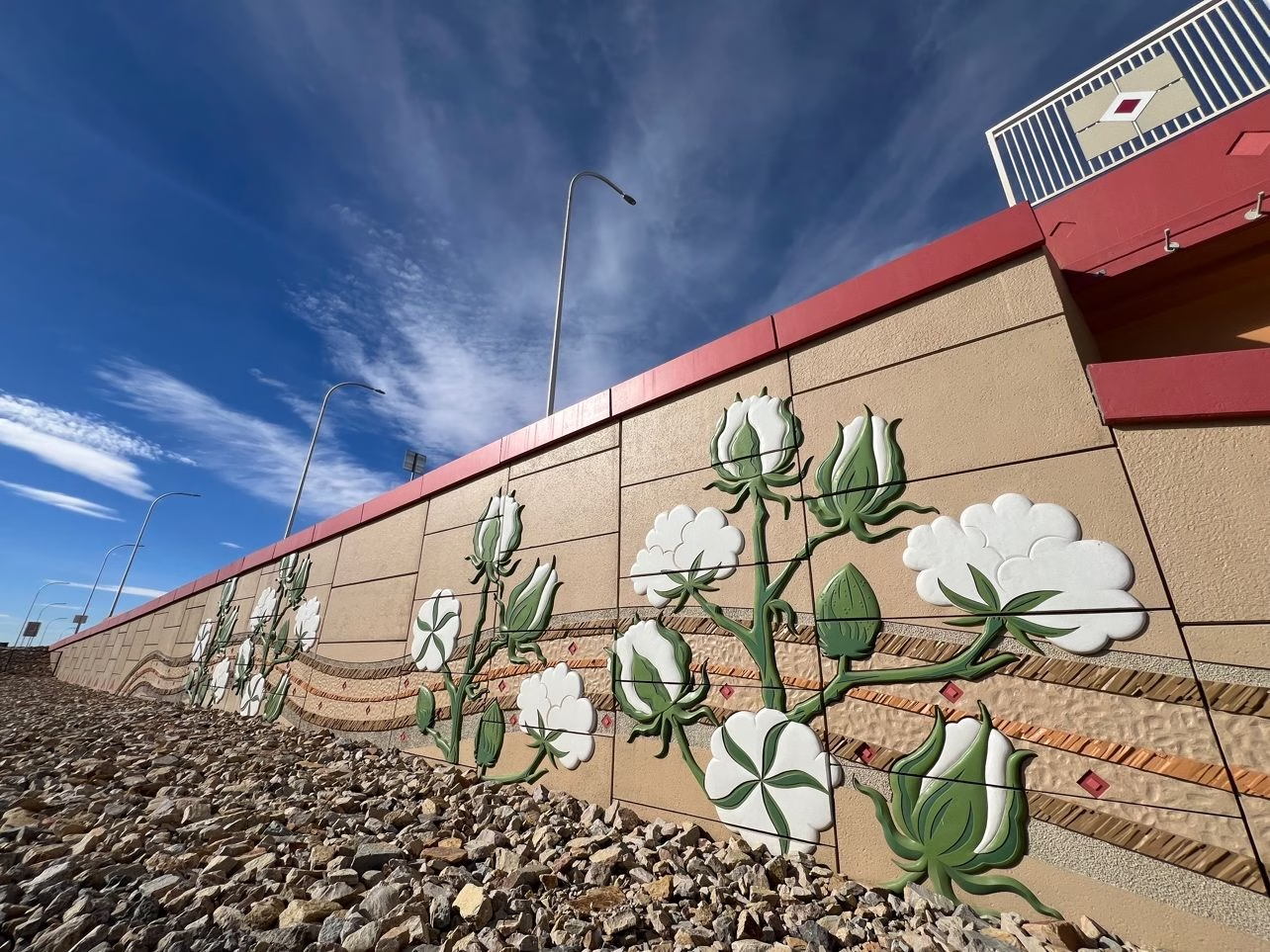
Our ElastoSpec urethane formliner system meets DOT specifications for elastomeric materials and is engineered for heavy highway applications — bridge abutments, sound walls, MSE walls, freeway underpasses, and retaining walls — where 25+ uses, deep pattern relief, and pattern repeatability are required. Every liner is manufactured in-house, with direct quality control from raw material to finished product.
Full-Project DOT Partnership
Working on a DOT Infrastructure Project?
Contact the Spec Formliners team for a compliance review, pattern consultation, or to request DOT-specification-ready samples.