How Hohokam pottery traditions became the blueprint for culturally meaningful highway infrastructure along Interstate 10 in Arizona.
The ADOT I-10 Early Road to I-8 project presented a rare opportunity: transform standard highway infrastructure into something that genuinely honors the cultural heritage of its region.
The design team faced the challenge of creating concrete surfaces that served their structural purpose while reflecting the artistic legacy of the Hohokam people — one of the Southwest's most significant ancient civilizations, whose pottery traditions are among the most recognized in North American archaeology.
The key requirement: cultural authenticity. Multiple stakeholder groups — including the Gila River Indian Communities — needed to be engaged throughout the design process to ensure the representations were respectful, accurate, and meaningful.
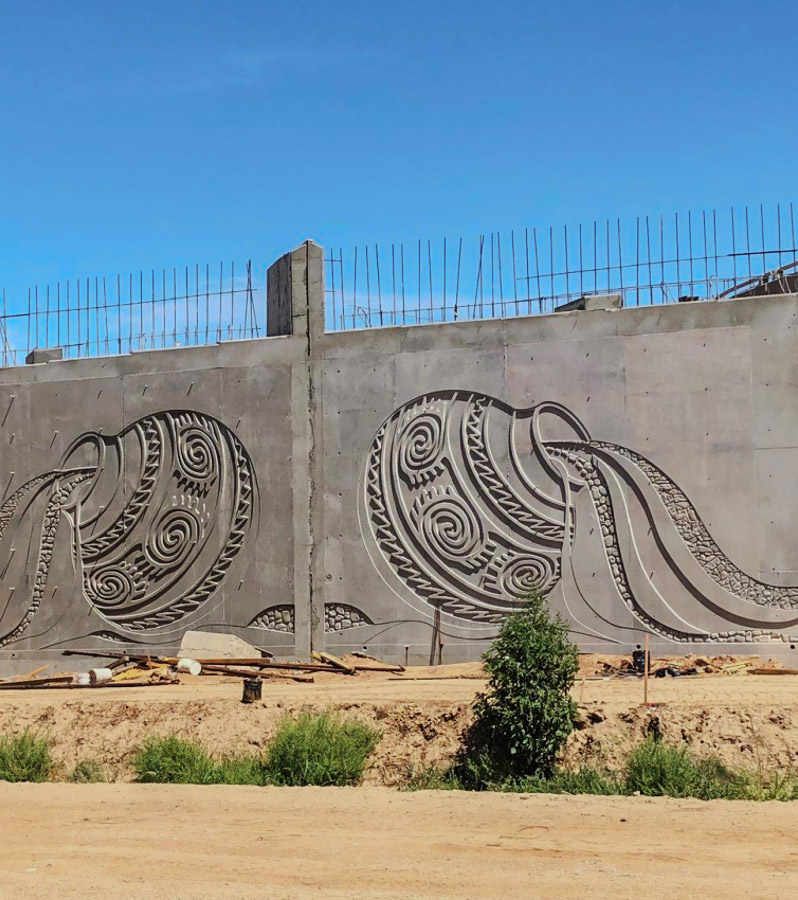
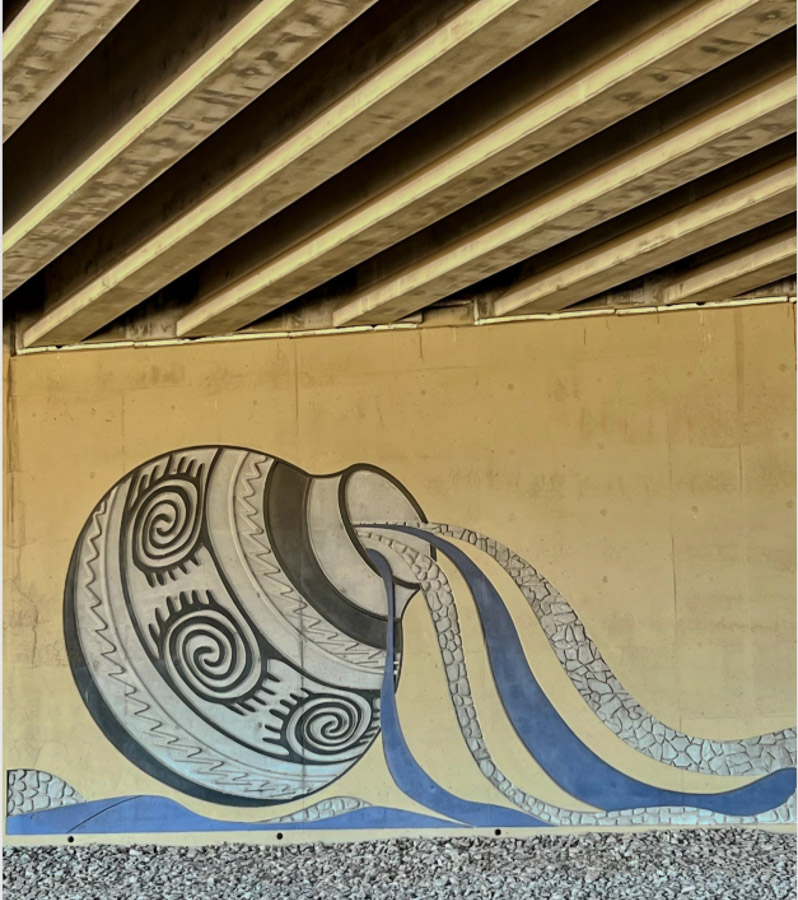
Drawing directly from pottery discovered at the nearby Casa Grande Ruins National Monument, the design team worked to capture the defining characteristics of Hohokam artistic tradition — translating them from ceramic vessels into large-scale concrete relief at highway scale.
Each motif was carefully researched and reviewed with cultural stakeholders to ensure the designs honored their origin rather than merely referencing it.
Intricate spirals drawn from traditional Hohokam ceramic decoration, scaled for highway viewing distances.
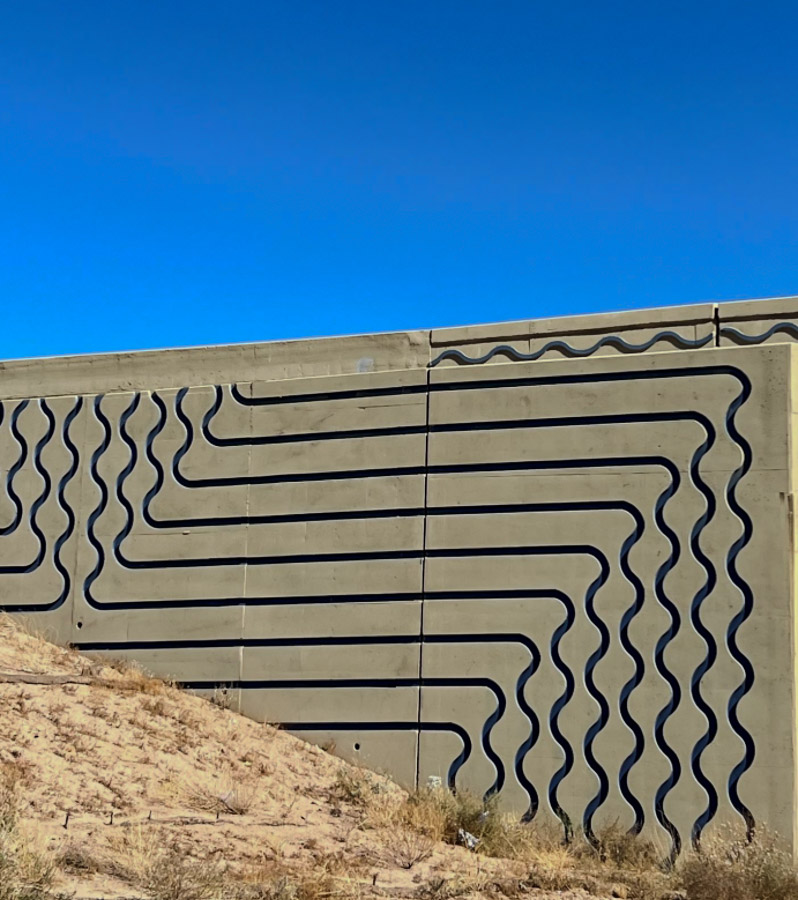
Flowing line patterns representing water — a central symbol in desert culture where water is survival.
Repeating geometric compositions that mirror the structure and precision of original Hohokam pottery work.
Cultural narratives embedded into the wall design, turning the highway corridor into a linear journey through history.
A research-driven, community-collaborative approach — from historical study to finished concrete — ensured cultural integrity at every step.
Deep study of Hohokam pottery patterns and their cultural significance, anchored by artifacts at Casa Grande Ruins National Monument.
Multiple design reviews with ADOT, the City of Casa Grande, and the Gila River Indian Communities to validate cultural accuracy and respect.
Pottery motifs scaled and adapted for large-format concrete application — maintaining artistic integrity while engineering for highway viewing.
Spec Formliners engineered custom form liners to precisely translate the intricate designs into durable, repeatable concrete infrastructure.
The ADOT I-10 project delivered measurable benefits that go well beyond the structural — proving that infrastructure investment can carry lasting cultural value.
Hohokam artistic traditions kept visible and relevant in a contemporary public context, seen daily by thousands of travelers.
Local residents and the Gila River Indian Communities see their heritage celebrated and honored within public infrastructure.
What could have been ordinary highway walls now provide visual interest and cultural education for every driver passing through.
The distinctive concrete designs serve as regional landmarks, giving the I-10 corridor a unique sense of place and identity.
Custom art motif form liners. Any pattern. Any scale. From DOT infrastructure to architectural facades, we help teams transform concrete into something lasting.