Commercial Construction

Architectural
Concrete
Formliners

Texture, depth, and design continuity built directly into commercial concrete construction — without sacrificing schedule or efficiency.

Tilt-Up & Cast-in-Place Commercial & Industrial USA Manufactured
Scroll
The Shift in Commercial Concrete

Commercial Buildings Are No Longer Designed Around Flat Concrete Walls

Architectural concrete has become a defining element in modern commercial construction. What was once treated purely as a structural system is now expected to contribute to the overall appearance, branding, and visual identity of a project.

As tilt-up and cast-in-place construction continue to dominate large commercial developments, concrete walls are no longer hidden behind additional materials or secondary facade systems. They are often the finished surface itself.

Architectural concrete formliners allow developers, architects, and contractors to shape those surfaces directly during construction — introducing texture, depth, and design continuity without sacrificing the efficiency that makes concrete construction so attractive.
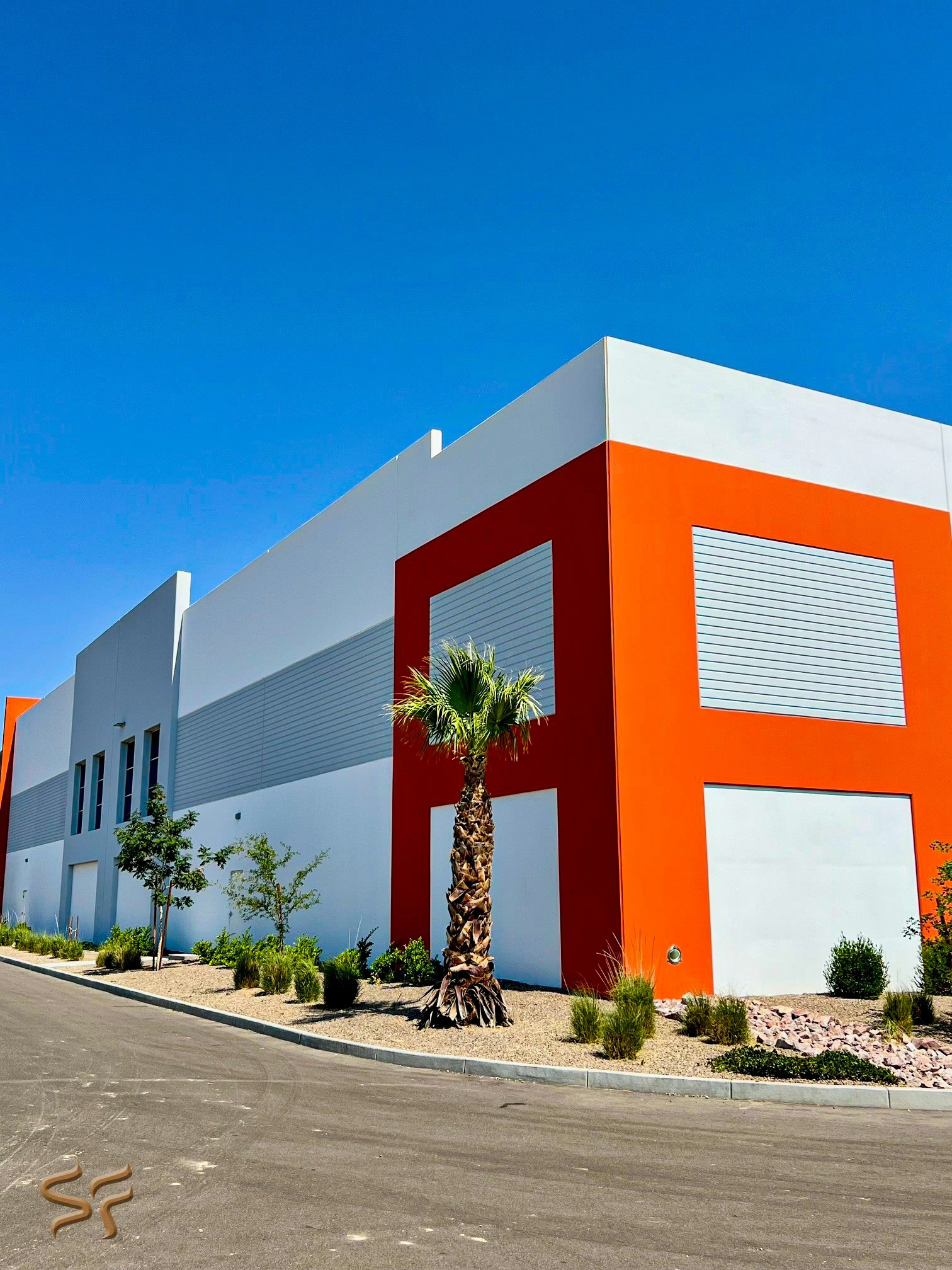
Tilt-Up Construction
Long uninterrupted walls that once would have been hidden behind cladding are now expected to stand on their own architecturally.
Cast-in-Place Systems
Site-specific geometry, continuous pours, and integrated structural transitions benefit from texture formed directly into the wall surface.
The Result
A cleaner construction workflow and a more cohesive finished building — architecture and structure accomplished simultaneously.
Who Specifies
Architects, developers, tilt-up contractors, and design-build teams looking to combine structural efficiency with long-term visual quality.
Architectural formliner texture on tilt-up commercial wall
Tilt-Up Construction

Formliners in Tilt-Up Construction

Tilt-up construction remains one of the most efficient methods for delivering large commercial buildings at scale. Its speed and structural simplicity make it especially effective for industrial, retail, logistics, and mixed-use developments where timelines and repeatability matter.

Modern tilt-up buildings are no longer expected to look purely utilitarian. Developers and municipalities increasingly want buildings that feel more integrated into surrounding commercial environments, particularly in high-visibility corridors.

Instead of introducing additional facade materials after panel installation, texture can be formed directly into the tilt-up panel during casting — preserving the efficiency advantages of tilt-up construction while delivering an intentional architectural appearance.

Distribution Centers Office Campuses Retail Developments Logistics Facilities Mixed-Use
Architectural Identity

Architectural Concrete as Part of the Building Identity

Because the texture is formed directly into the concrete, the appearance remains consistent long after construction is complete — without relying on coatings, veneers, or applied finishes that may deteriorate over time.

01
Stronger Street Presence
Texture and shadow create scale and visual interest across surfaces that would otherwise feel flat or repetitive from the street.
02
Visual Continuity
Improve visual continuity across multiple buildings or phases, tying campus and multi-structure developments together architecturally.
03
Soften Large Elevations
Introduce depth and variation across expansive concrete walls, softening the appearance of large-scale industrial and commercial elevations.
04
Elevate Perceived Quality
Align industrial construction with higher-end commercial expectations — making a building feel designed, not just assembled.
Construction Methods

Cast-in-Place and Tilt-Up Systems Create Different Design Opportunities

Although tilt-up and cast-in-place construction are often grouped together, they create very different architectural conditions. Formliners can adapt to both approaches — but the design intent often changes depending on the construction method.

Design at Scale

Designing for Scale Without Losing Detail

One of the biggest challenges in commercial concrete construction is preserving design consistency across very large structures. Minor differences in texture alignment, finish quality, or panel sequencing can become highly visible once a project is assembled.

Formliners help control that consistency at the production level rather than relying on field-applied finishes later in the process. Because the texture originates in the formwork itself, the final appearance is more predictable from panel to panel and pour to pour.

Many commercial developments eventually expand into multi-building campuses where visual continuity matters just as much as structural performance. Establishing texture and architectural language early allows future phases to remain connected without redesigning the entire system.

300+
Available Patterns
2
US Plants
30+
Years Experience
Any
Custom Size
"A building may begin as a single structure, but many commercial developments eventually expand. Establishing architectural language early allows future phases to remain visually connected."
Long-Term Performance

Long-Term Durability in Commercial Environments

Commercial buildings experience constant exposure to traffic, weather, maintenance equipment, and environmental wear. Surfaces that require repainting, refinishing, or regular repairs can quickly increase operational costs over the life of the property.

Architectural concrete formliners reduce many of those concerns because the finish is integrated directly into the concrete itself — not applied on top of it.

No Coatings to Maintain
Instead of relying on applied surface systems, the texture becomes part of the wall structure — no repainting or recoating required.
Weather & UV Resistant
Integral concrete texture maintains its appearance while resisting weathering, UV exposure, pollutants, and environmental stressors.
Ages Naturally
Textured concrete ages more naturally over time, reducing the visibility of staining, surface wear, and environmental exposure across large wall systems.
High-Traffic Environments
In parking structures, distribution facilities, and high-traffic commercial developments, durability becomes a practical advantage rather than simply an aesthetic one.
Architecture & Efficiency

Architectural Concrete and Construction Efficiency Can Coexist

One of the biggest misconceptions in commercial concrete construction is that architectural detail automatically creates complexity. When texture and finish are integrated directly into the forming process, many projects actually become simpler — not more complex.

Eliminate Facade Phases
When texture is integrated into the forming process, teams can eliminate additional facade installation phases and reduce overall construction sequencing.
Reduce Trade Coordination
The finish becomes part of the structural wall rather than a separate installation — simplifying coordination between trades on complex commercial projects.
Simplify Maintenance
Long-term maintenance requirements are dramatically reduced — no applied finishes means no repainting schedules, no delamination, and no recoating costs.
FAQ

FAQs About Architectural Concrete Formliners

Why are formliners increasingly used in commercial concrete construction?
Commercial developers and architects are increasingly using formliners because they allow architectural texture to be integrated directly into structural concrete without requiring additional facade systems or secondary finishing phases. This helps balance design goals with construction efficiency.
Can tilt-up buildings achieve high-end architectural finishes?
Yes. Modern tilt-up construction frequently incorporates formliners to create architectural concrete finishes that add depth, texture, and visual consistency across large wall systems while maintaining the speed advantages of tilt-up construction.
How do formliners affect long-term maintenance costs?
Because the texture is formed directly into the concrete rather than applied afterward, architectural concrete surfaces typically require less long-term maintenance than painted or attached facade materials. This can help reduce repainting, repairs, and finish deterioration over time.
Who typically specifies architectural concrete formliners on commercial projects?
Architectural concrete formliners are commonly specified by architects, developers, tilt-up contractors, and design-build teams looking to combine structural efficiency with long-term visual quality in commercial construction.
When should formliners be incorporated into a commercial project?
Formliners are most effective when integrated early in the design and engineering process so panel layouts, wall sequencing, and architectural textures can be coordinated with the overall construction workflow.
Can formliners be used across both tilt-up and cast-in-place wall systems?
Yes. Formliners can be adapted for both tilt-up and cast-in-place construction depending on the project scope, wall geometry, and architectural requirements.
Related Pages
Explore how formliners are applied across project types, structure systems, and market segments.
Ready to specify? Our team works directly with architects, developers, and contractors on commercial concrete projects of all scales.
Architectural Concrete Solutions
Concrete That Works as
Structure & Architecture

Whether used in tilt-up panel systems, cast-in-place walls, or large commercial facades, the right formliner system helps create durable architectural finishes that scale efficiently across modern construction projects.