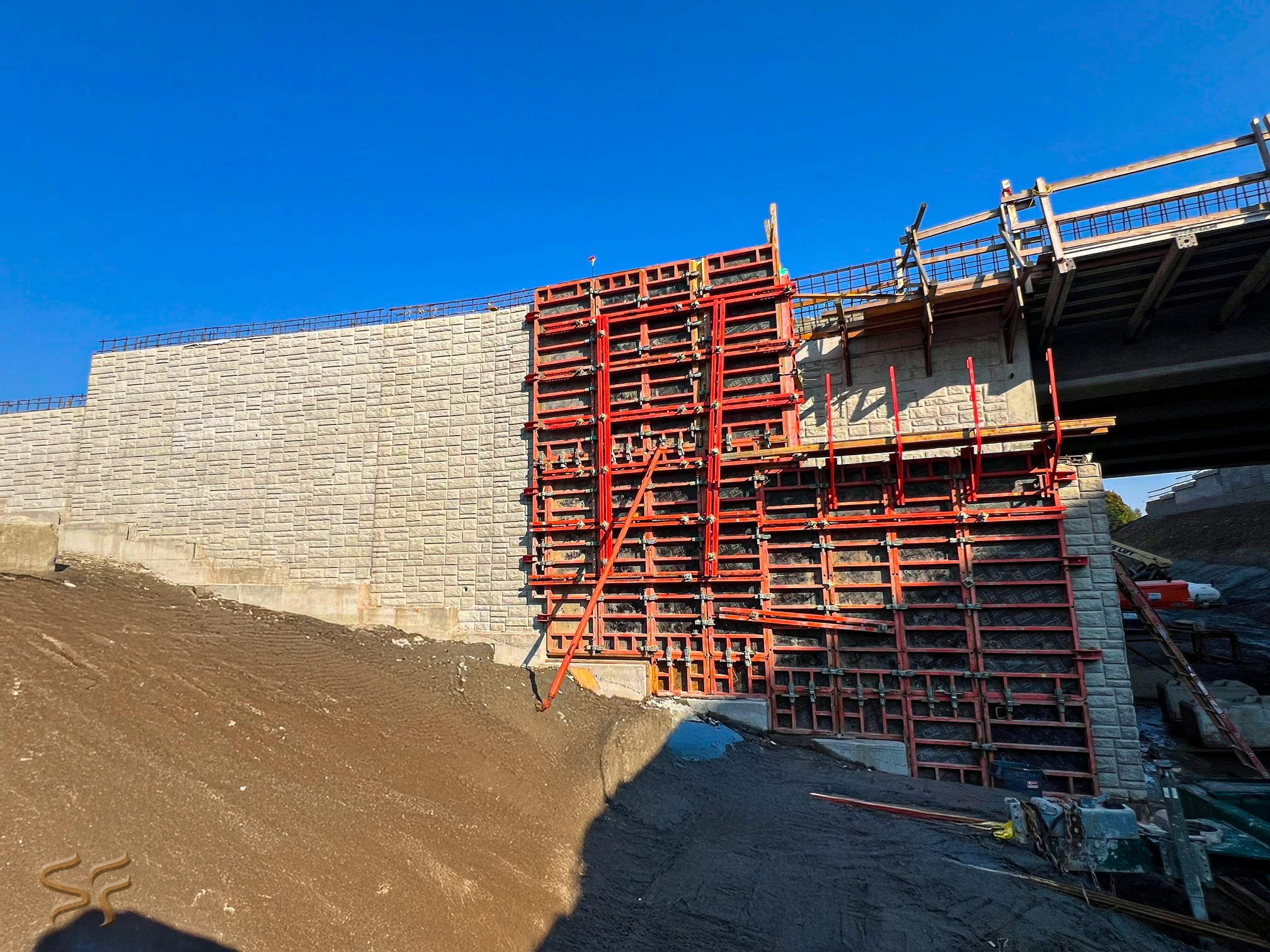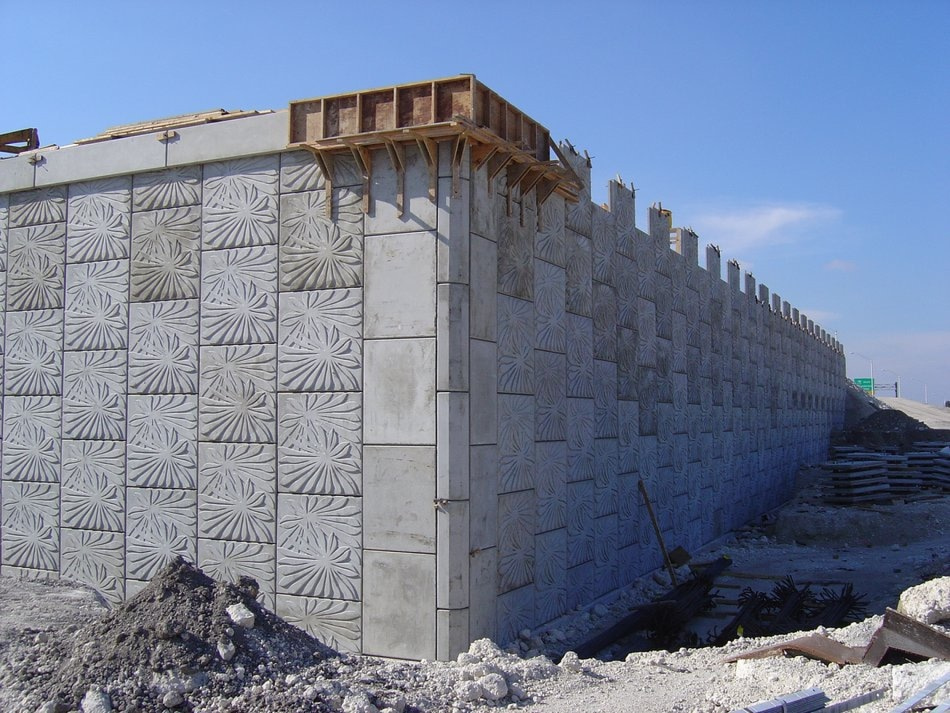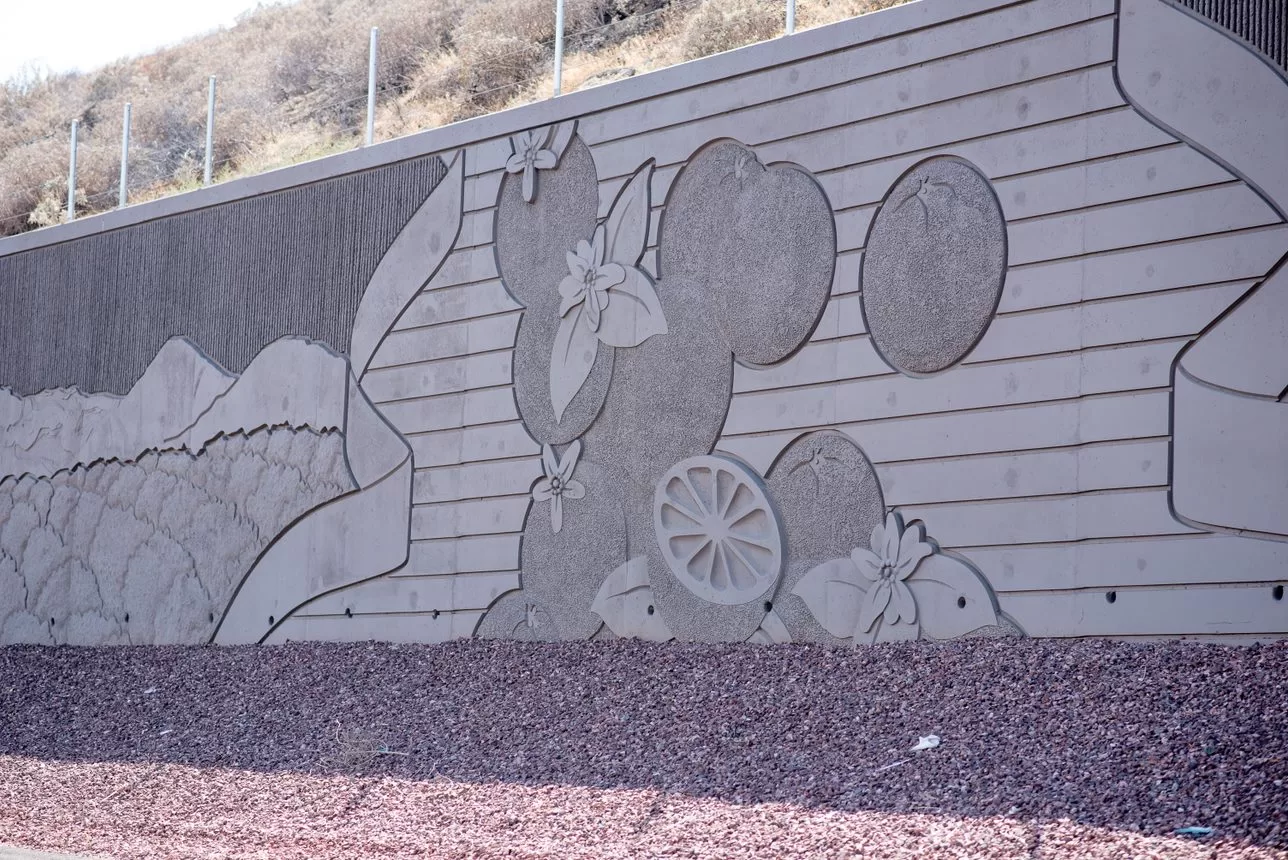
Durable, scalable textured concrete solutions that transform highway noise barriers into architectural assets — built to last for decades of roadside exposure.
Noise barriers are designed to reduce sound transmission from traffic, but their size and placement often make them dominant visual features. Without treatment, these walls can appear repetitive and industrial.
Formliners address this by allowing agencies to introduce pattern and visual consistency across long corridors — embedding design directly into the concrete during construction for a permanent architectural finish that withstands environmental exposure.
Highway sound walls must perform under continuous environmental and mechanical stress. Formliners are engineered to maintain their integrity across large-scale pours and extended use.
Textured finishes help minimize visible wear over time — maintaining appearance far longer than smooth concrete surfaces.
Irregular surfaces disrupt paint application and reduce the visibility of graffiti, lowering remediation costs.
Maintains appearance despite sun exposure, moisture, freeze-thaw cycles, and roadway pollutants year-round.
Ensures uniform design across both precast and cast-in-place systems, maintaining continuity across long wall runs.
Eliminates the need for applied coatings or finishes, reducing long-term upkeep for transportation agencies.
Formliner materials are selected to align with Department of Transportation specifications and structural performance standards.
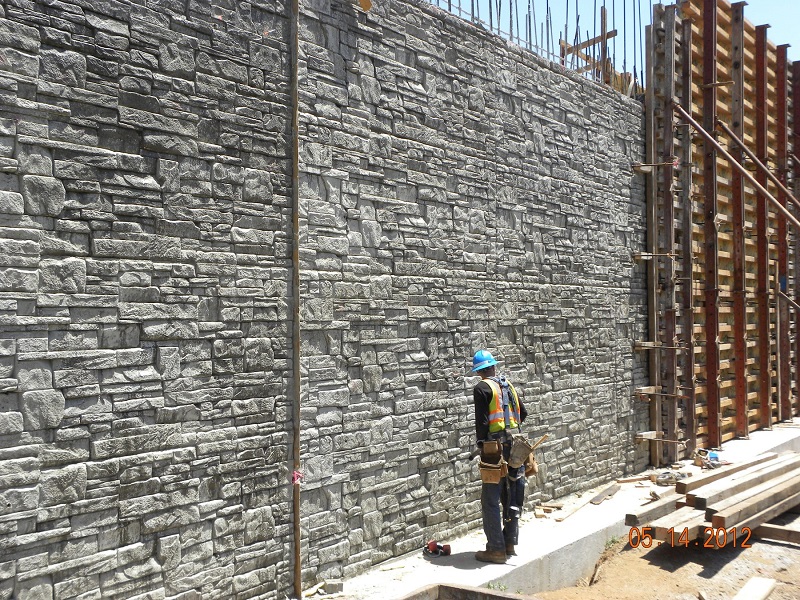
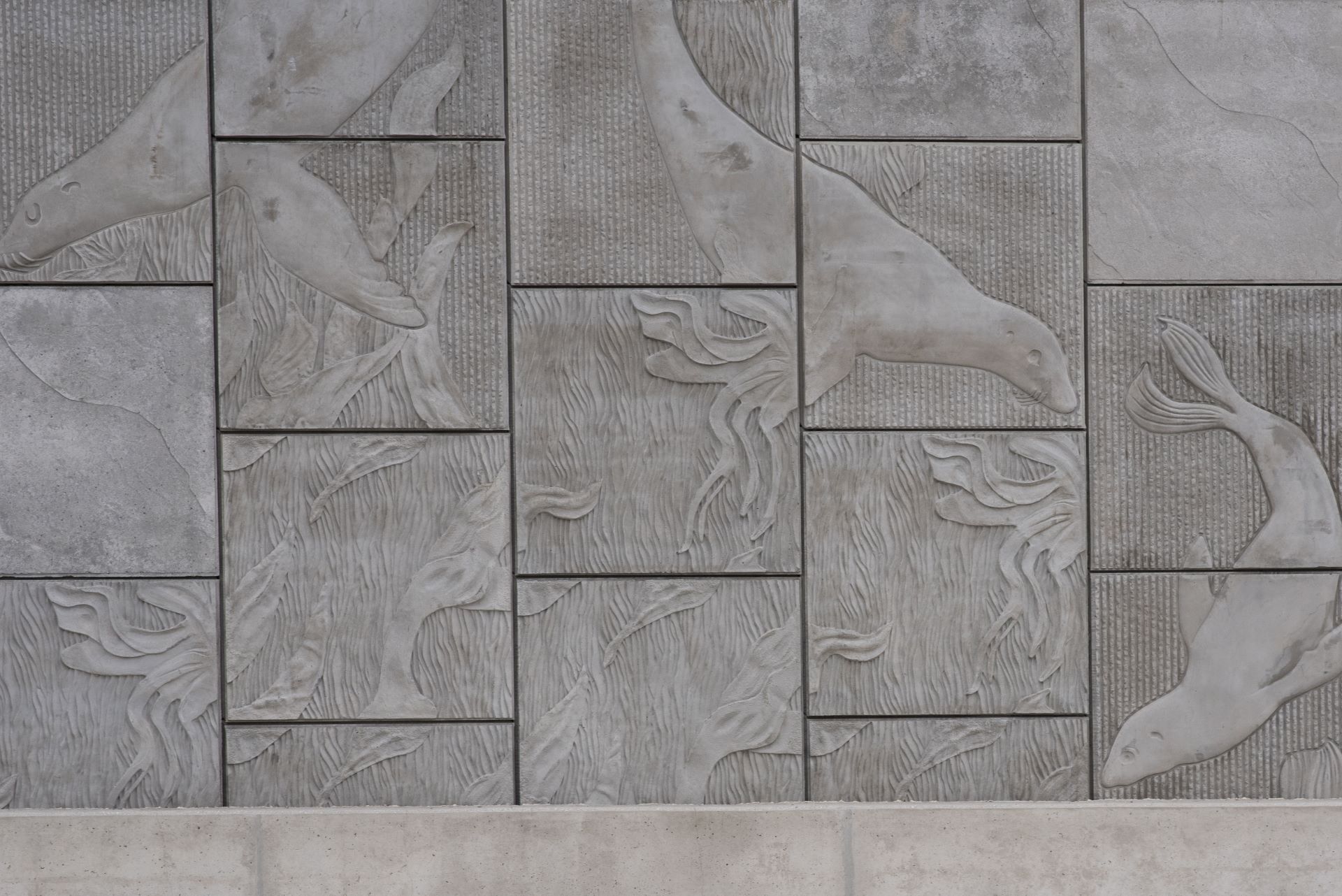
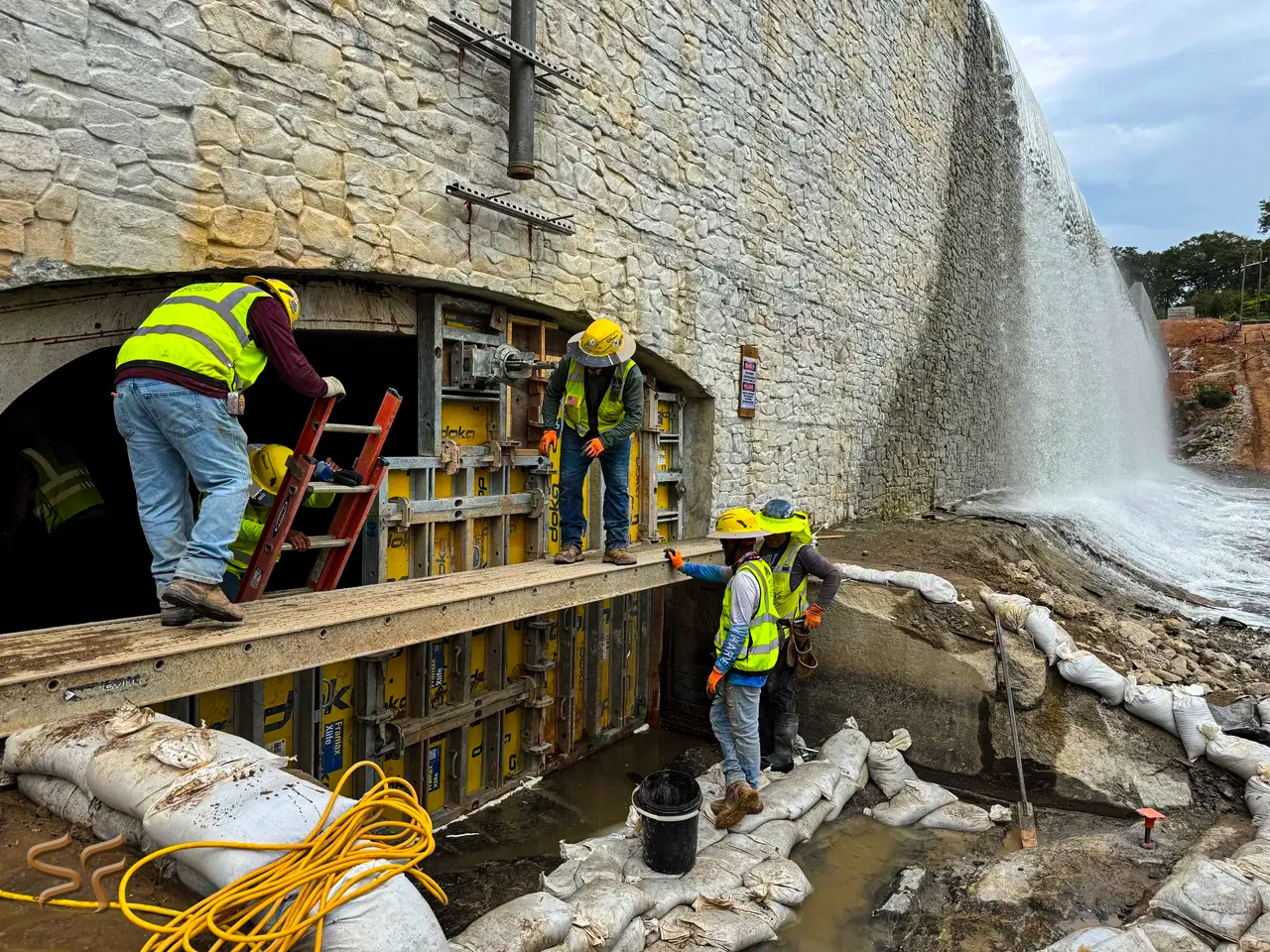
Because noise barriers often extend for hundreds or thousands of feet, selecting the right pattern is essential for maintaining visual interest without overwhelming the structure. Designs can be engineered to repeat seamlessly across panels while maintaining variation in appearance.
Designs should account for pattern repetition, visual scale, and driver perception at speed. Subtle variation and non-repetitive sequencing are often used to prevent visual fatigue across extended wall lengths.
Sound wall formliners are adaptable to both major construction approaches used in highway barrier systems. Formliner systems can be tailored to match the chosen construction method, ensuring consistent results regardless of project type.
Achieving a clean and uniform finish across long wall segments requires attention to detail during installation. When executed correctly, the result is a continuous surface that maintains visual consistency across extended distances.
Formliners provide long-term advantages that extend beyond initial construction, making them a practical investment for transportation agencies focused on sustainability and cost efficiency.
Texture eliminates the need for periodic recoating or resurfacing programs, lowering total lifecycle costs.
Improved resistance to staining keeps walls looking consistent far longer than smooth concrete alternatives.
Transportation agencies spend less on upkeep over the infrastructure's lifespan, improving project ROI.
Textured finishes outperform applied coatings in long-term durability under continuous environmental exposure.
Aesthetically treated barriers receive significantly higher approval from adjacent communities and commuters.
Contact our team to discuss lifecycle performance for your specific project and environment.
Get a Quote →Sound wall systems must comply with strict engineering and regulatory standards. Working with experienced suppliers ensures compatibility with project specifications and regional guidelines.
Most formliners are manufactured from urethane, elastomeric compounds, or high-density plastics. Urethane is commonly used for detailed textures and repeated use, while rigid plastic systems are often selected for simpler patterns and high-volume projects.
The most common challenges include misaligned seams, inconsistent pattern repetition, and improper form attachment. These can be avoided with proper planning, layout control, and experienced installation practices.
No specialized maintenance is typically required. Textured surfaces often perform better over time because they hide staining, dirt, and minor surface wear more effectively than smooth concrete.
Designs should account for pattern repetition, visual scale, and driver perception at speed. Subtle variation, directional textures, and non-repetitive sequencing are often used to prevent visual fatigue across extended wall lengths.
Yes. Many formliner systems are designed to align with state DOT requirements, including structural compatibility, durability standards, and approved surface finishes. However, final approval typically depends on project-specific specifications.
Contact our infrastructure specialists for material recommendations, DOT compliance guidance, or to request a free sample for your next highway barrier project.