
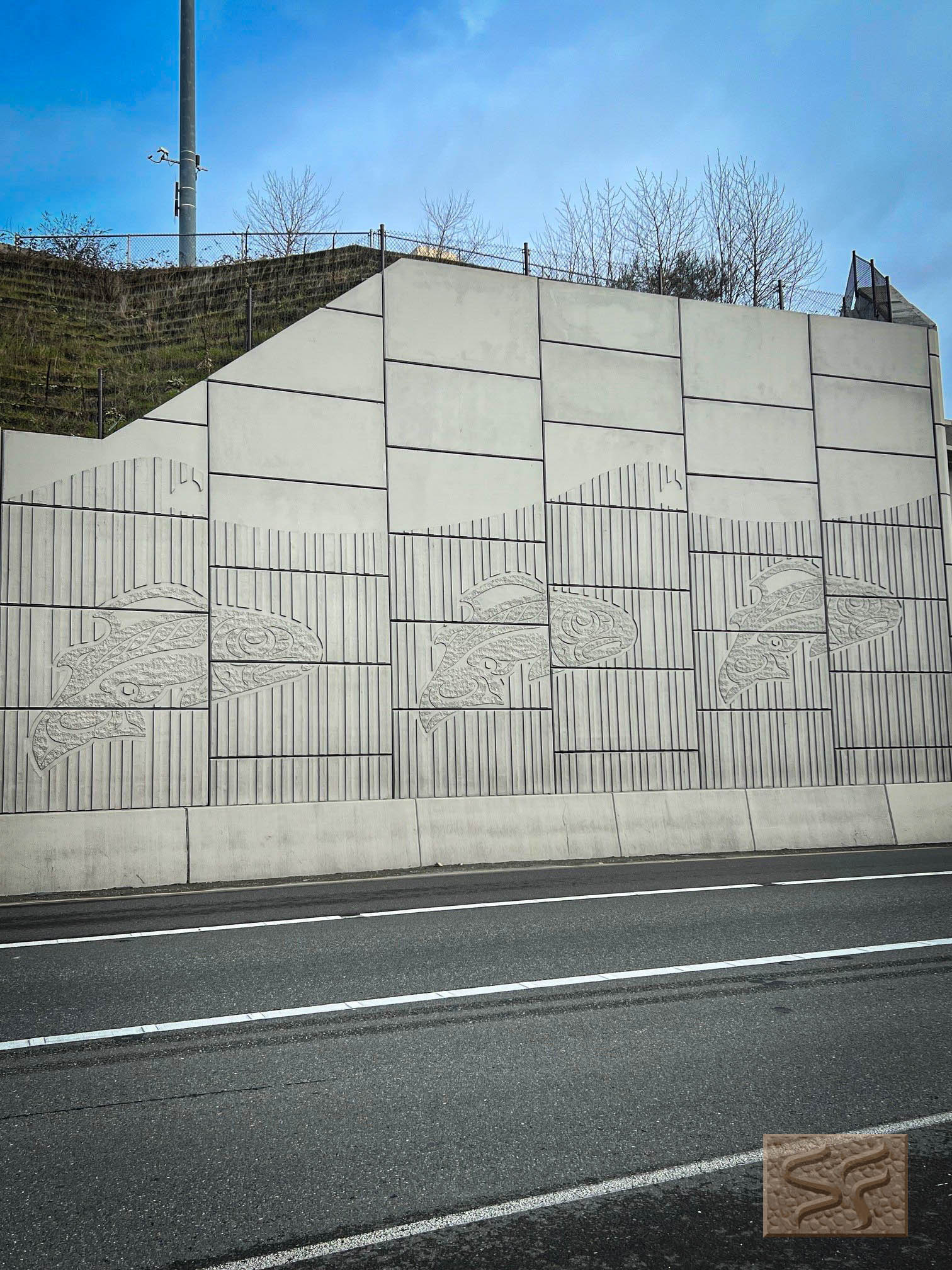
Highway expansions and urban development are necessary for a growing economy, but they bring a localized problem: traffic noise. To mitigate this, Departments of Transportation (DOTs) rely on highway sound barriers. However, while these massive concrete noise walls effectively block sound, they have historically created another issue — visual blight. Communities routinely push back against heavy infrastructure projects that threaten to box them in with miles of flat, grey, monolithic concrete. Today, DOTs and civil engineers are solving this problem through aesthetic infrastructure. By utilizing architectural concrete formliners, structural walls are transformed into massive public art installations, mimicking natural stone, brick, timber, or custom community motifs.
What Is Aesthetic Infrastructure?
Aesthetic infrastructure is the practice of designing public works, like retaining walls, bridges, and highway sound barriers, to harmonize with or elevate their surrounding environment.
Instead of building a wall and then applying a secondary decorative veneer (which is expensive and prone to failure), the aesthetic is built directly into the structure. Contractors use reusable urethane or single-use plastic concrete formliners placed inside the casting beds or forms. When the wet concrete is poured and cured, the liner is stripped away, revealing a deeply textured, monolithic surface.
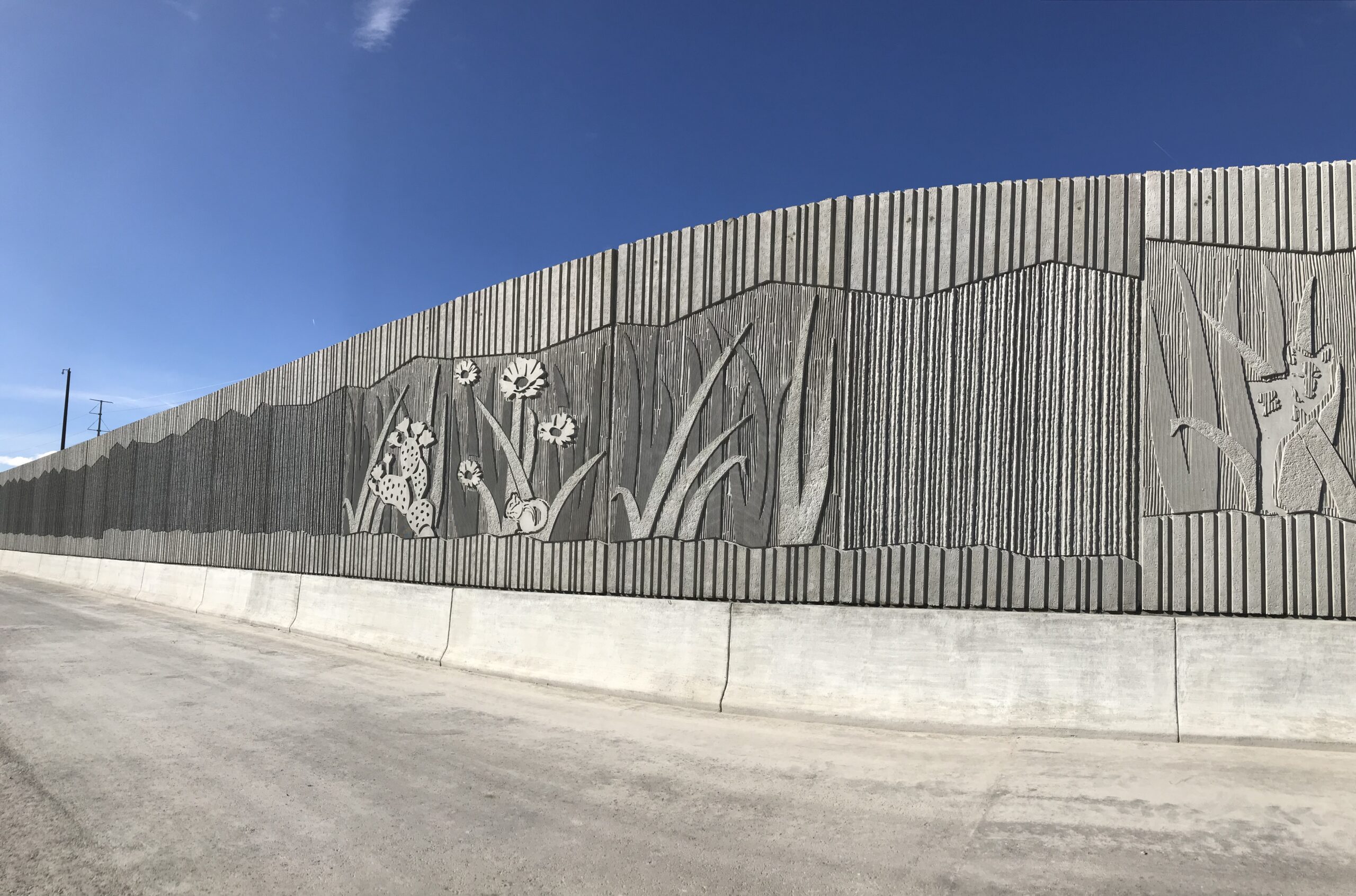
Why DOTs Are Mandating Custom Formliners for Noise Walls
Faster Community Approval
The biggest hurdle for municipal infrastructure isn't always funding; it's public approval. Homeowners do not want a 20-foot tall concrete slab in their backyard. When city planners use custom formliners to cast local historical symbols, regional wildlife, or natural stone patterns into the wall, the barrier becomes a community asset. This visual appeal often turns public opposition into support, accelerating project timelines.
Natural Graffiti Deterrence
Flat, smooth concrete is a blank canvas for vandalism. Heavily textured concrete, such as a deep fractured fin, jagged drystack stone, or custom ribbed pattern, makes it incredibly difficult for taggers to paint a legible image. The physical depth of the relief breaks up the surface, masking minor vandalism and making anti-graffiti coatings much more effective.
Acoustic Diffusion
Sound barriers work primarily by reflecting noise back toward the highway or absorbing it. However, a deeply textured formliner can also help diffuse sound waves. The peaks and valleys of a heavily patterned wall break up directional sound energy better than a perfectly flat, reflective plane, contributing to a quieter environment for adjacent neighborhoods.
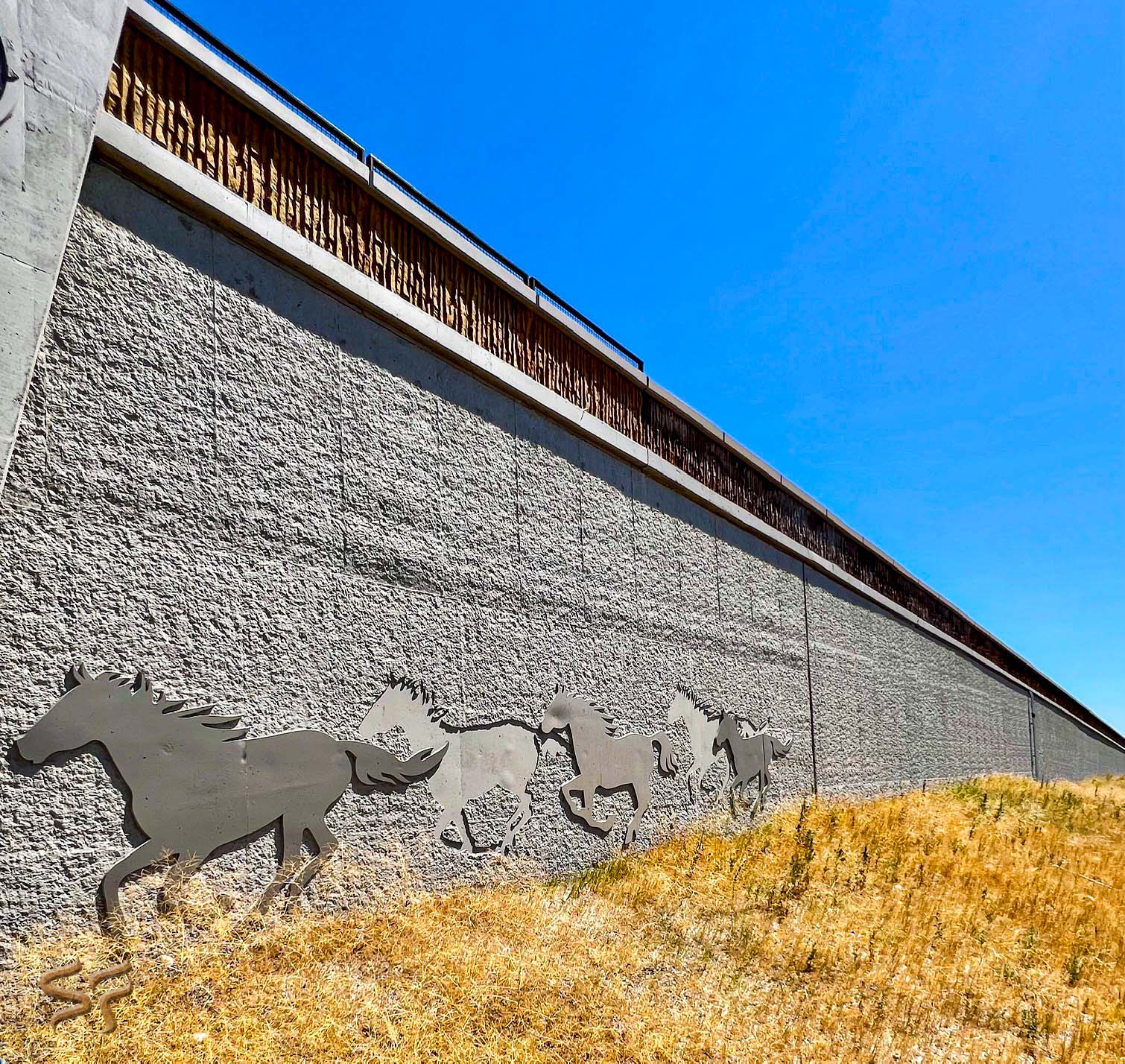
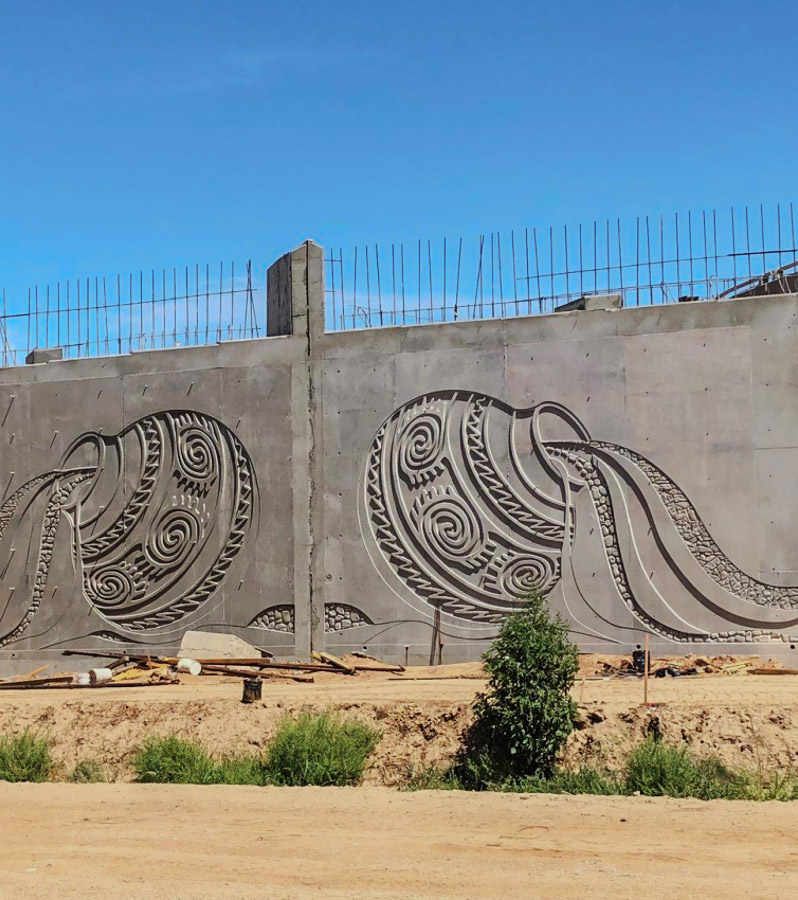
Climate Resilience: Built for Every Market
When building infrastructure meant to last 50 to 100 years, the materials cannot fail. Applied veneers (like glued-on stone or masonry facades) are notorious for delaminating over time, especially in harsh weather. Because a formliner pattern is cast integrally into the concrete, there are no adhesives to fail and no joints for water to infiltrate.
This structural resilience is critical as infrastructure projects expand across North America. A precast sound wall poured in the heat of Southern California faces entirely different environmental stresses than one subjected to the brutal freeze-thaw cycles of Ontario or British Columbia. As Spec Formliners actively expands into the Canadian market in 2026, delivering urethane formliners that produce monolithic, weather-impervious concrete patterns is essential for meeting international DOT standards.
Key advantage: Because the pattern is cast integrally into the concrete, there are no adhesives to fail and no joints for water to infiltrate — unlike applied veneers which are notorious for delaminating over time.
Bridging the Gap Between Design and Constructability
Creating aesthetic infrastructure requires a balance between the architect's vision and the contractor's ability to execute it efficiently. Complex geometries, seamless pattern continuations, and flawless release from the cured concrete demand precision engineering.
With manufacturing facilities strategically located in Santa Ana, CA, and St. Clair, MO, Spec Formliners has the capacity to supply massive, multi-mile highway projects seamlessly. As we prepare to celebrate our 30th Anniversary in September 2026, our focus remains on providing specifiers and precasters with the highest quality standard and custom formliners in the industry. Three decades of engineering expertise means that whether a project calls for a standard ashlar stone or a highly intricate, CNC-milled custom mural, the result will be flawless, durable, and beautiful.
Highway sound barriers no longer have to divide communities. With the right formliners, they can reflect them.
Designing a Sound Wall for an Upcoming Infrastructure Project?
Contact the Spec Formliners team today to discuss custom patterns, request samples, or get expert guidance on your specifications.