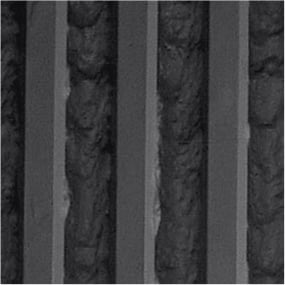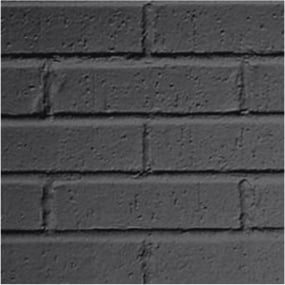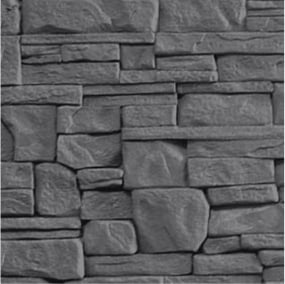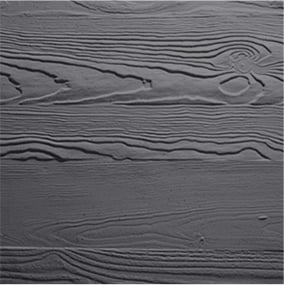
For Architectural & Infrastructure Projects — durable, scalable concrete surface solutions engineered for large-scale builds across the United States & Canada.
Formliners are used across a wide range of structural and architectural concrete applications — from highways and bridges to retaining walls and commercial facades.
Used to enhance large-scale concrete surfaces exposed to public view, improving visual integration across long transportation corridors.
Applied to structural elements that require both durability and visual consistency — ensuring a finished appearance across exposed bridge faces.
Improve long vertical surfaces with repeating or custom textures, delivering aesthetic value to structures that would otherwise appear blank and industrial.
Used in building facades, site walls, and decorative structural elements where appearance and material durability are both required.
Formliners are commonly specified in large-scale infrastructure and commercial concrete projects because they provide a consistent, durable surface solution without introducing additional materials or installation phases.
Formliners allow for repeatable, uniform patterns across extended wall systems, ensuring visual consistency from panel to panel or pour to pour — especially important in projects spanning hundreds or thousands of linear feet.
Because texture is formed directly into the concrete, there is no need for applied finishes such as coatings, paint, or veneers. This reduces ongoing maintenance, repainting, and repair costs over the life of the structure.
Formliners are widely used in Department of Transportation (DOT) projects and other public infrastructure where materials must perform under constant exposure to traffic vibration, weather, and environmental stressors.
Formliner systems can be deployed across precast or cast-in-place construction, making them adaptable to a wide range of project sizes and methods without compromising design intent.
Many projects require visual integration with surrounding environments. Formliners allow teams to meet design guidelines, reduce visual impact, and improve public perception of large concrete structures.
Formliners are installed inside concrete formwork to shape the finished surface during the pour, allowing texture and pattern to be built directly into the concrete.
Different formliner materials are selected based on project complexity, reuse requirements, and the level of surface detail required. Each system offers specific performance characteristics suited for different types of construction.
| Material | Reuse | Best For |
|---|---|---|
| SpecVac Single | 1× | Tilt-up, one-time pours |
| SpecVac Multi | 2–10× | Cast-in-place projects |
| ElastoSpec-Lite | 15–25× | Custom patterns, DOT semi-elastomeric |
| ElastoSpec | 25+× | Heavy highway, DOT elastomeric |
Formliners provide a wide range of design options depending on project requirements. Custom molds can be developed to meet specific design and project requirements.
Formliners are engineered for use in conditions where concrete structures must perform reliably over extended periods. Because the texture is formed directly into the concrete, it does not peel, chip, or degrade like applied finishes.
The texture is formed directly into the concrete — not applied to it. It lasts as long as the structure itself.
Withstands the pressure of large-volume concrete placement.
Performs under continuous mechanical stress from adjacent roadways.
Resists degradation from sun exposure and seasonal temperature swings.
Maintains surface integrity against runoff, moisture intrusion, and pollutants.
Formliners integrate directly into standard forming systems, making them suitable for both precast and cast-in-place applications. Proper installation ensures uniform results across large surfaces and complex geometries.
Attach the formliner securely to the inside face of the formwork system.
Position panels for consistent pattern continuity across the full wall surface.
Apply SpecRelease or approved release agent for clean formliner separation.
Pour and consolidate concrete using standard vibration and placement practices.
Remove formwork to reveal the finished textured concrete surface.
There is no functional difference. Both terms refer to the same product, with the variation based on spelling and search usage.
Costs vary depending on material type, complexity, and reuse requirements. While they increase initial forming costs, they often reduce total project costs by eliminating additional finishing work.
High-quality urethane formliners can be reused multiple times when properly handled, making them cost-effective for large projects. ElastoSpec urethane systems are rated for 25+ uses.
Yes. Many systems are designed to meet Department of Transportation requirements and are commonly used in public infrastructure, including sound walls, bridge abutments, and freeway underpasses.
Yes. They are frequently used with integral color or staining to achieve specific design outcomes.
No. They are part of the forming process and do not impact the structural integrity of the concrete.
From standard textures to fully custom designs, selecting the right system early improves efficiency and final results. Request design options, technical specifications, or project consultation to get started.